
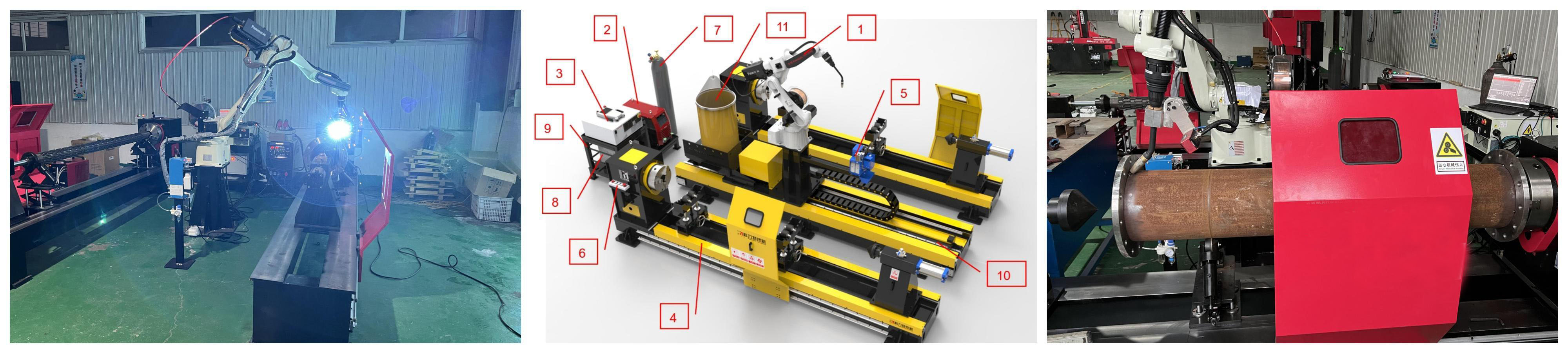
What is actually being sold when you buy a welding robot
The robot arm is the least variable part of a welding robot purchase. Six-axis industrial arms from the major makers are reliable, comparable in performance, and largely interchangeable for the loads welding demands. The differences that decide whether a robot cell produces good parts for ten years are in everything around the arm: the positioner, the fixture, the torch and its cleaning station, the seam sensing, the safety system, and whether the supplier can service what they sold.
That matters when comparing quotations, because two offers with the same robot model can differ by a factor of two in capability and still look similar on a single-page quote.
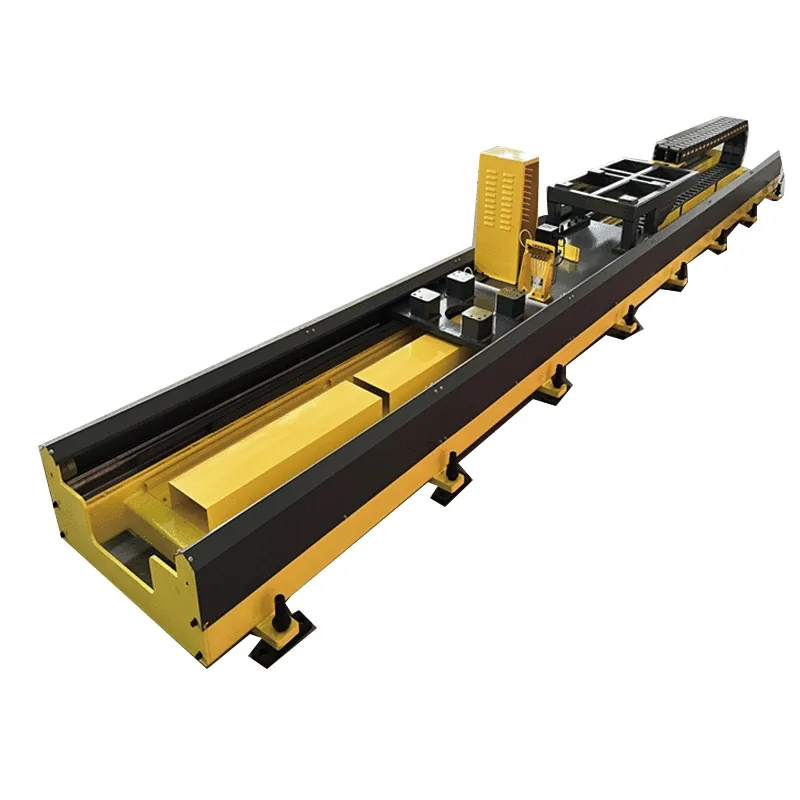
The seven items to compare, in order of importance
| Item | What to ask | Why it dominates the outcome |
|---|---|---|
| Fixturing | Is the fixture engineered for my part family, and who owns the design? | Bad fixturing defeats a good robot; it is the single largest determinant of cycle time and repeatability |
| Positioner | Single or double station? Coordinated with the robot, or independent? | Positioner axes must be under one controller for coordinated motion; two-station halves idle time |
| Seam finding | Touch sensing, laser tracking, or teach-and-repeat only? | Fit-up variation is normal; without sensing the robot welds where the part should have been |
| Torch and cleaning | Torch changers, anti-spatter, wire feed distance? | Torch consumables and spatter are the day-to-day cost of running a cell |
| Safety system | Guarding, light curtains, interlocks, risk assessment documentation? | A legally required part of the installation, not an accessory — and expensive to retrofit |
| Acceptance test | Is there a documented FAT on my parts before shipment? | The only reliable way to know the cell works before it arrives |
| Service and spares | Who responds, from where, and what is the spare parts lead time? | A cell down for a two-week spares wait costs more than the price difference between suppliers |
The economics: arc-on time, not robot speed
Robot specifications quote travel speed and repeatability. Neither is what makes a cell pay back. The number that matters is arc-on time — the fraction of the shift during which the arc is actually burning.
A manual welder on fabricated work typically achieves 20–35% arc-on time; the rest goes on repositioning, measuring, chipping and fetching. A well-designed robot cell reaches 60–80%. The gap between those two numbers, multiplied by deposition rate, is where the justification lives. That is why a second fixture station and a good positioner often add more value than a faster robot.
Three costs are routinely underestimated:
- Programming and part changeover. A cell that takes a shift to reprogram for a new part family loses its advantage on mixed production. Offline programming and a sensible fixture design are what make small batches viable.
- Fit-up quality. A robot will weld a badly fitted joint perfectly — and produce a defective part perfectly. Manual welding tolerates bad fit-up because the welder compensates; a robot does not.
- Consumables and spatter. Torch tips, nozzles, liners and anti-spatter consumption are a recurring line item that scales with arc-on time. Budget for it.
When a robot is the wrong purchase
Honest suppliers say this at the quotation stage, because the alternative is a dissatisfied customer. A robot cell is usually the wrong answer when:
- The part repeats fewer than a few dozen times a year. Fixture and programming cost will not amortise.
- Access is restricted. If the joints are inside a structure or behind obstructions, a robot cannot reach them any better than a person — and often worse.
- Fit-up varies beyond what sensing can correct. A process that relies on the welder bridging gaps will fail when automated.
- The shop cannot maintain it. Robots need clean power, clean air, spatter management and someone who understands the programme. That is a capability commitment, not a purchase.
What to send with an enquiry
- Drawings of the part family, not just the current part.
- Annual volumes and batch sizes per part.
- Total weld length per part and the joint types involved.
- Part weight and how it is loaded.
- Required cycle time, and whether takt time is fixed by a downstream process.
- The weld quality standard and any inspection requirement.
- Available floor space, crane access and power supply.
Supply terms
Welding robot cells are configured per project around the part family. The DESAN robot programme covers 6-axis cells with single- and double-axis positioners, gantry and travelling configurations, and capacities up to 100 t in the positioner range. Minimum order quantity is 1 set. Standard positioner sets ship in 30–50 days after deposit, with cell integration scheduled in the technical proposal. Payment terms are T/T; trade terms are FOB, FCA or CIF. Core ranges are CE compliant and supplied with a certificate of compliance, together with guarding and risk-assessment documentation for the installed cell.
DESAN ELECTRIC LTD supplies robot welding systems under the DESAN and BIQEE brands and handles every enquiry, quotation and contract directly. The company has served 1,000+ customers in 20+ countries over 20+ years, with welding engineering experience dating from 1997. For cell configurations see robot welding positioner sets and the GR40 gantry robot system.