
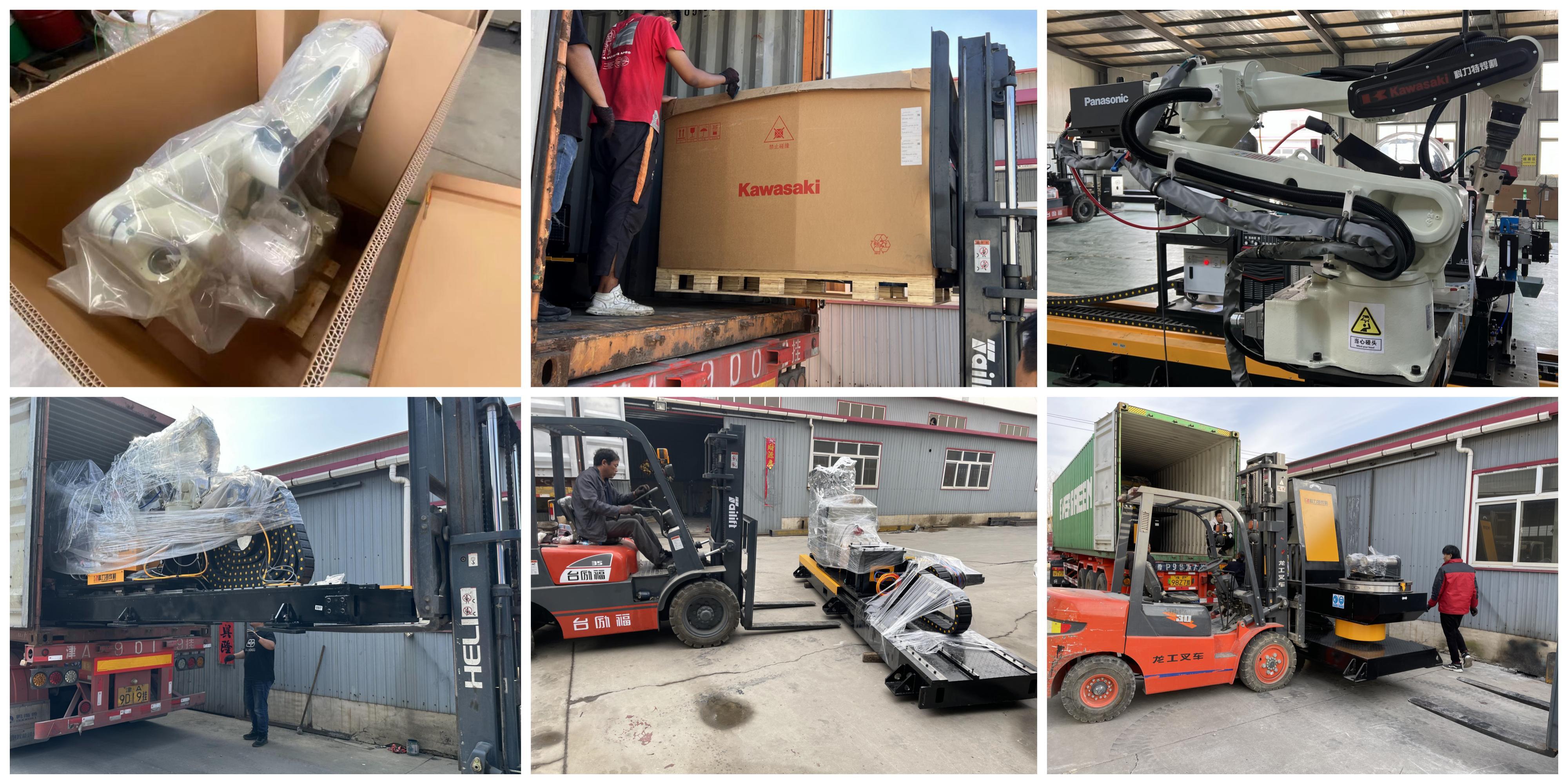
Why a robot cell needs a positioner at all
A six-axis welding robot can reach a fixed part from many angles, but it cannot reach all of the part from the best angle. Downhand welding — torch vertical, weld pool flat — gives the highest deposition rate, the best penetration control and the most consistent bead appearance. Every joint welded out of position costs travel speed and adds spatter and rework.
A double-axis P-type positioner solves this by adding two servo axes under the workpiece: one for rotation and one for tilt (or lift). The robot and positioner are then driven as one kinematic system, so the controller can hold the joint in the flat position while the robot welds it — the workpiece moves through the robot's working envelope rather than the robot stretching to reach every orientation.
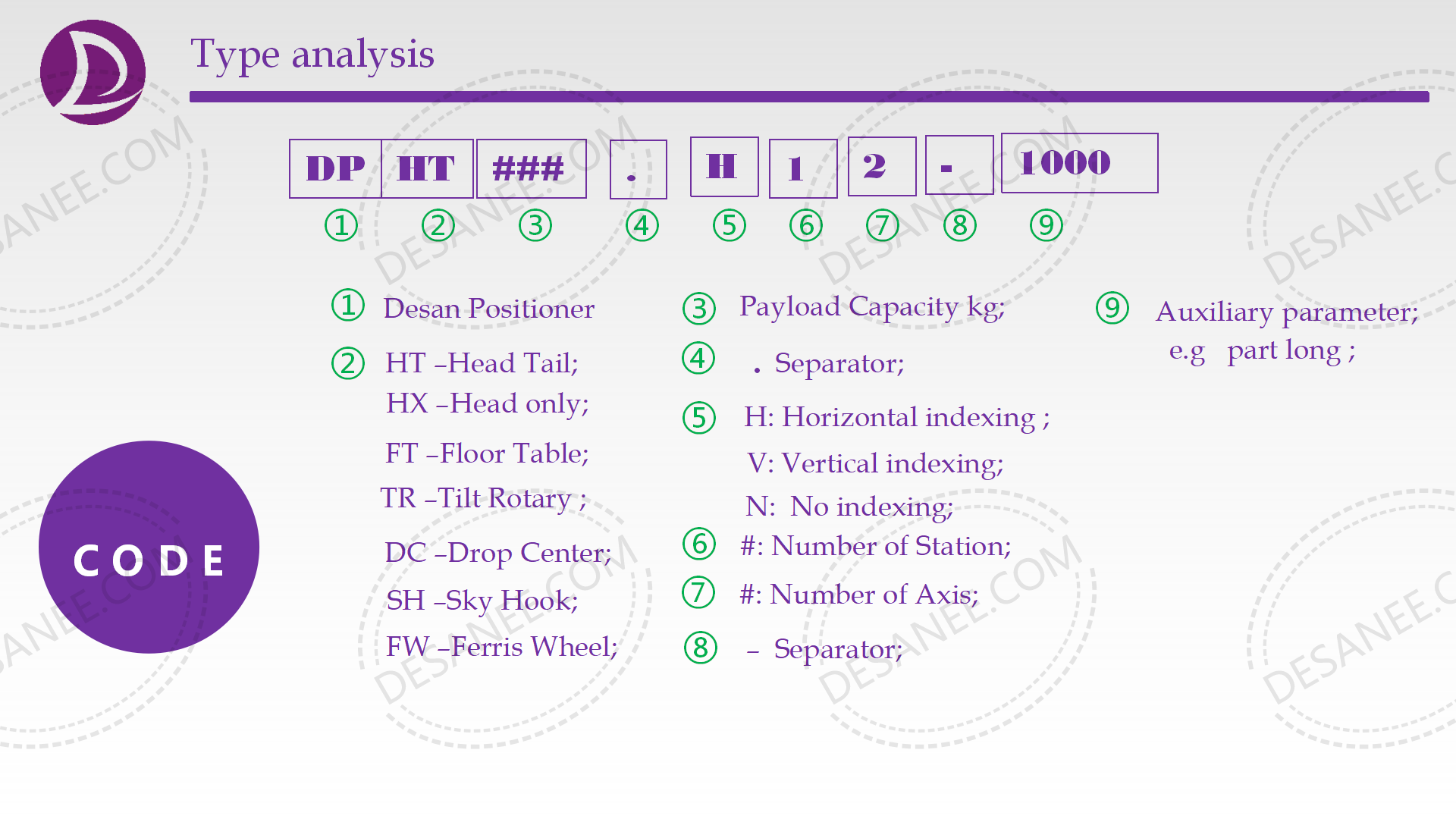
The three robot positioner architectures
| Type | Axes | Workpiece | Where it fits |
|---|---|---|---|
| Single-axis (H type / turntable) | 1 — rotation | Flat plate, circular parts, short cylindrical work | Simple cells, high repetition, small parts |
| Double-axis P type | 2 — rotation + tilt or lift | Frames, brackets, shafts, medium fabrications | The general-purpose choice for fabrication robot cells |
| Double-axis L type / head-tailstock | 2 — rotation + tilt | Long workpieces: beams, tubes, spools | Long parts that need support at both ends |
| Triple-axis / travelling | 3+ — with a linear travel axis | Large assemblies beyond robot reach | Cells that must cover a long working area |
The "P type" designation comes from the positioner's working envelope: the two axes are arranged so the workpiece is carried through a P-shaped path, keeping the joint presented to the robot from one side and avoiding the need to reach over the fixture. For most fabrication cells this is the most useful compromise between fixture stiffness, workpiece access and floor space.
What coordinated motion actually requires
Bolting a positioner to the floor next to a robot does not make a coordinated cell. Three things have to be true:
- One controller, or a properly synchronised pair. Positioner axes must be driven from the robot controller — or from a positioner controller with an interlocked, time-synchronised interface. Independent control means the workpiece moves while the robot is still welding the previous joint.
- Kinematic calibration. The controller must know the geometric relationship between the positioner axes and the robot base to within a fraction of a millimetre. Small errors here show up as the torch drifting off the joint whenever the positioner rotates.
- Payload and inertia, not just weight. A positioner rated for a given mass is rated for that mass with a particular centre of gravity and moment of inertia. A fixture that shifts the centre of gravity outward reduces the usable payload; a fixture that adds height increases the moment arm on the tilt axis. Both are routinely underestimated at the specification stage.
Fixture design decides whether the cell earns its cost
In a typical robot cell the positioner is idle while parts are loaded and unloaded, and the robot is idle while the operator clamps. The most effective improvement is almost never a faster robot — it is a second fixture station so that loading happens on one side while welding happens on the other. A P-type positioner with two plattens, rotated 180°, converts a single-station cell into a shuttle and can raise arc-on time substantially with no change to the robot.
Applications
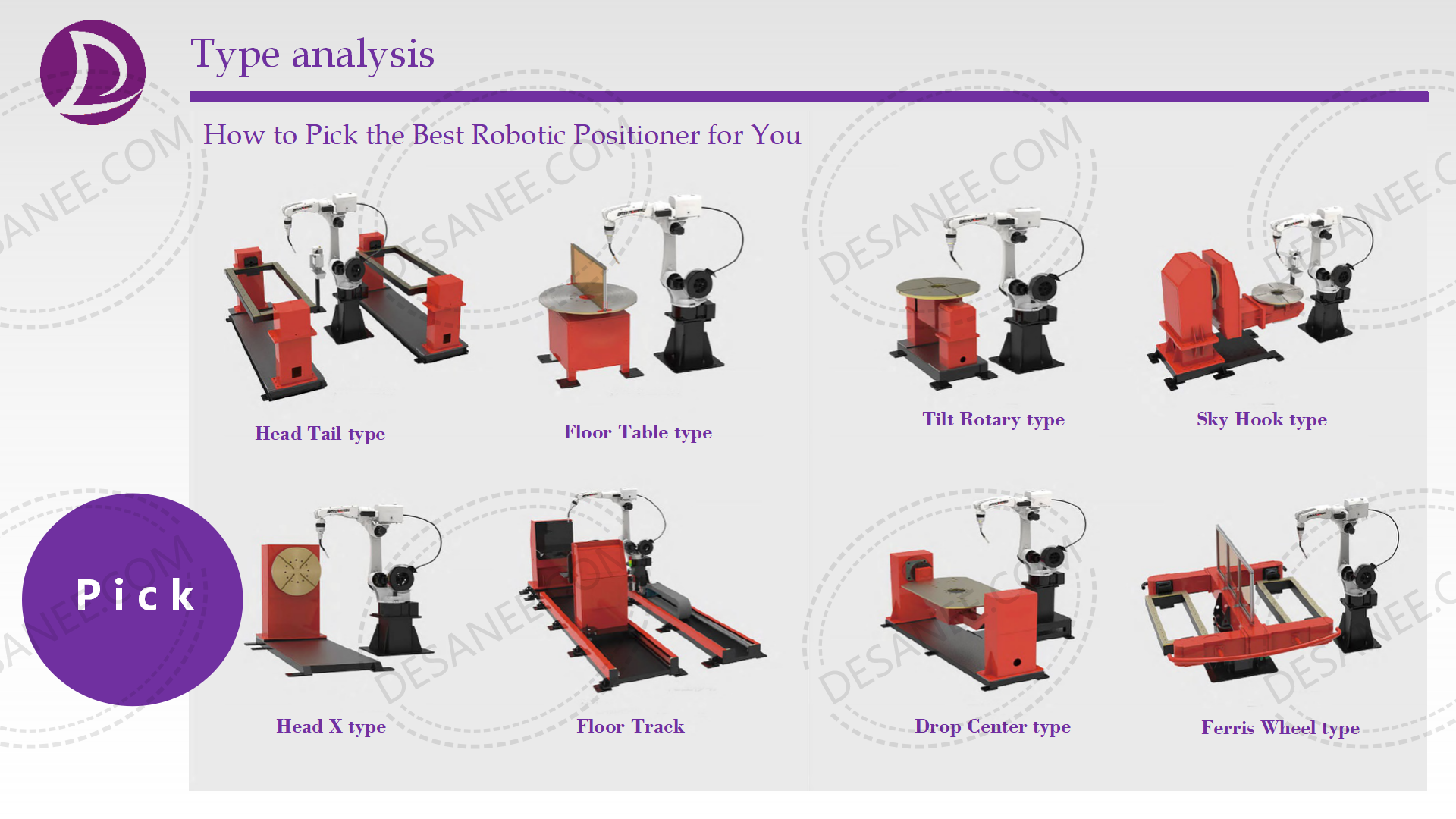
- Engineering machinery — frames, booms, brackets and sub-assemblies welded in medium batches.
- Automotive and transport equipment — chassis parts, axles and structural assemblies.
- General fabrication — any part family that repeats often enough to justify the fixture cost.
- Energy and process equipment — skid frames, supports and pipe spools.
Technical data: AUT-SWP-ZW positioner series
The single-axis positioners used in the robot cells are specified by payload and admissible axis radius — the radius figure is the one that binds, because it defines how far the centre of gravity can sit from the rotation axis at that payload.
| Model | Payload | Max axis radius | Table |
|---|---|---|---|
| AUT-SWP-ZW-300 | 300 kg | ≤ R350 mm | R600 mm |
| AUT-SWP-ZW-500 | 500 kg | ≤ R400 mm | R650 mm |
| AUT-SWP-ZW-800 | 800 kg | ≤ R500 mm | R650 mm |
| AUT-SWP-ZW-1000 | 1,000 kg | ≤ R500 mm | R650 mm |
Note what happens between 500 kg and 800 kg: payload rises by 60% while the admissible radius rises only from R400 to R500. That is the moment arm talking. A fixture that pushes the part's centre of gravity beyond the stated radius consumes payload capacity that the datasheet appears to offer — which is why a positioner quoted on tonnage alone so often turns out to be marginal in service.
Specifying a robot positioner set
Robot positioners are quoted together with the cell, because the positioner rating, the fixture and the robot reach have to be resolved together. To configure a set we need: the part family drawings (not just one part), the weight of each part plus fixture, the required cycle time and batch size, the welding processes involved, the robot model if one is already selected, and the required positional accuracy at the joint. The GR and P-type ranges in the DESAN robot programme cover single- and double-axis configurations with capacities up to 100 t in the positioner range, integrated with 6-axis welding robots and optional travel axes.
Minimum order quantity is 1 set; turnkey robot cells are quoted per project. Standard positioner sets ship in 30–50 days after deposit, with cell integration scheduled in the technical proposal. Payment is T/T; trade terms are FOB, FCA or CIF. Core ranges are CE compliant; cells are supplied with a certificate of compliance and, where the installation requires it, a risk assessment and guarding documentation package.
DESAN ELECTRIC LTD supplies robot welding cells and positioners under the BIQEE and DESAN brands, with all enquiries and contracts handled by DESAN ELECTRIC LTD. The company has supplied 1,000+ customers in 20+ countries across 20+ years, with welding engineering experience dating from 1997.