
Cutting quality is weld quality, one step upstream
A CNC plate cutting machine decides more about the finished weld than most welders realise. The kerf width, the squareness of the cut face, the amount of dross and the dimensional accuracy of the blank all carry forward: a cut edge that is 1 mm out of square becomes a groove whose root face is wrong, and a blank cut 2 mm oversize becomes a fit-up gap that has to be closed by welding rather than by clamping.
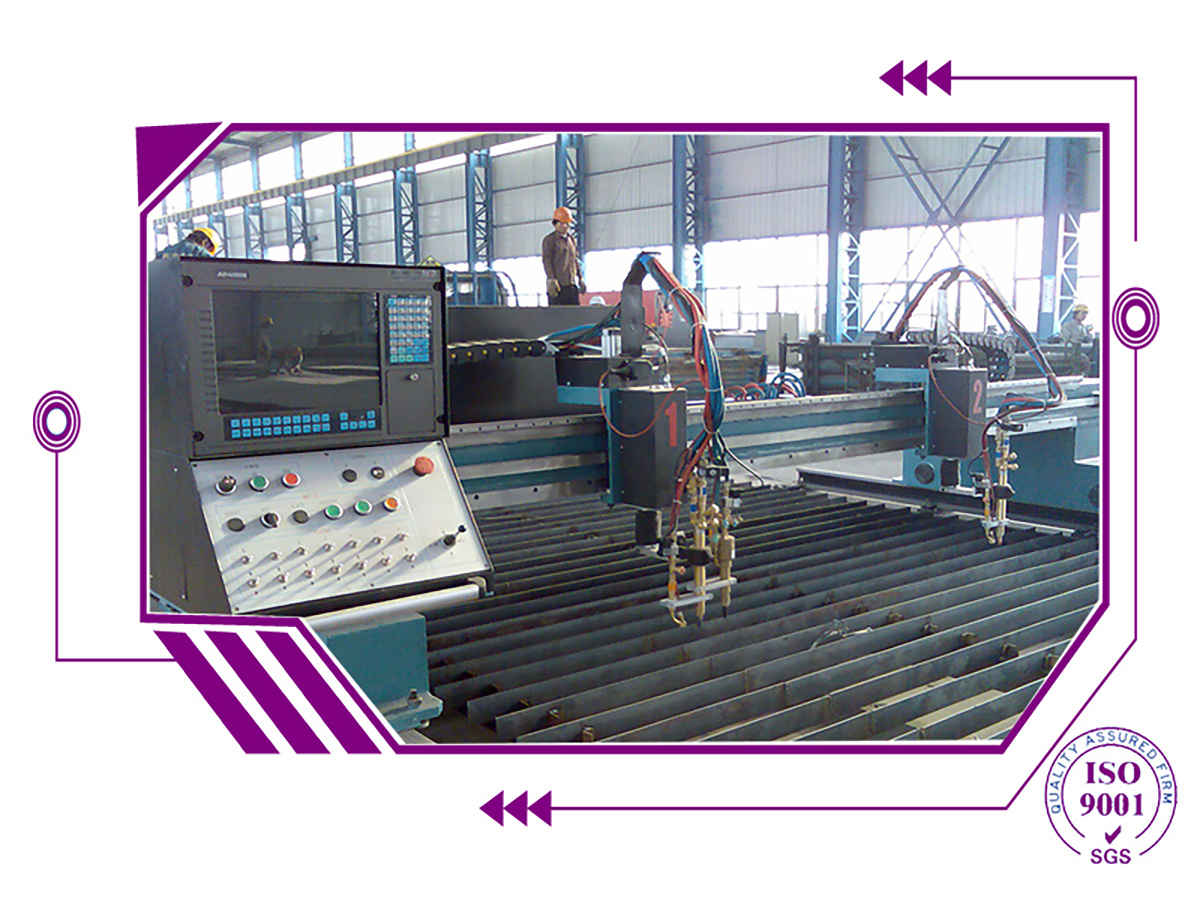
The CNC40 is a CNC plate cutting machine in the DESAN plate processing range, used in construction and bridge fabrication and in any shop that cuts structural plate to shape before welding.
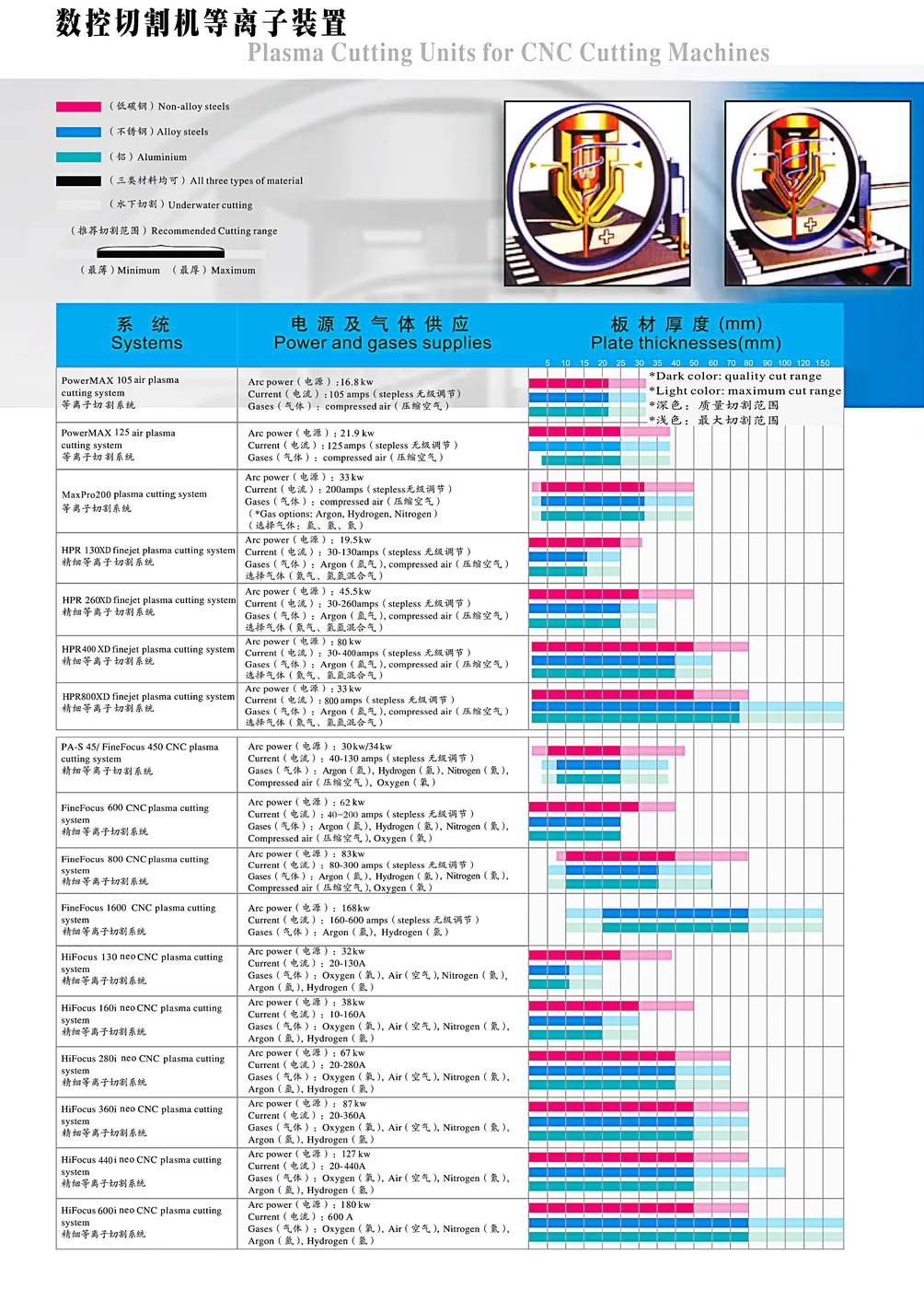
Flame or plasma: the decision is made by material and thickness
| Consideration | Flame (oxy-fuel) | Plasma |
|---|---|---|
| Carbon steel thickness | From 5 mm to over 150 mm | Up to about 40–50 mm economically |
| Stainless and aluminium | Not suitable | Yes — the main reason to choose plasma |
| Cut edge quality | Good on thick plate; needs dressing for weld prep | Clean top edge, dross on the underside |
| Heat input | High — wide HAZ, more distortion on thin plate | Narrower HAZ |
| Cutting speed on thin plate | Slow | Fast |
| Running cost | Oxygen/fuel gas consumption dominates | Consumables and power dominate |
For structural steel in bridge and building work — mostly carbon steel from 10 mm to 60 mm — flame cutting remains the economic choice, and the cut edge is normally dressed or machined afterwards if it is a weld preparation. For stainless, aluminium and thin plate, plasma is the only sensible option. Shops that cut both end up with either two machines or a combined table.
Kerf compensation and nesting
The cut consumes material: the kerf is the width of material removed. A machine that does not compensate for kerf produces parts that are undersize by half a kerf on each edge — on a 12 mm plate that is a few millimetres per part, which then has to be absorbed by the weld gap. Modern CNC controllers apply kerf compensation automatically; the specification that matters is whether the compensation table is correct for the actual consumable and thickness in use.
Nesting affects material yield, and on structural work yield is often a larger cost than cutting time. Good nesting software plus a machine with a working area matched to the plate sizes actually bought is worth more than a higher cutting speed.
What determines accuracy on a CNC cutting table
- Rail and gantry stiffness. A cutting gantry that flexes produces a cut that curves at the corners and a kerf that widens on acceleration.
- Drive and control resolution. Servo drives with proper acceleration control hold the programmed path; stepper-driven budget tables do not, at speed.
- Plate support. A plate that sags between slats cuts differently from one that is fully supported. Slat spacing and bed condition matter on thin plate.
- Height control. On plasma, torch height control is the single biggest factor in cut quality and consumable life. Without it, the same programme produces different results as the plate warms and distorts.
- Fume and dust extraction. A downdraft or water table is a health requirement and also protects the machine's ways from abrasive dust.
Where it fits in a fabrication line
In a structural shop the cutting table is the first station. It sets the accuracy of everything downstream: fit-up, welding gap, and the amount of manual correction needed before welding. That is why a shop building H-beams or box sections will normally pair a CNC cutting table with mechanical edge preparation — either a rolling beveler for carbon steel or an edge milling machine for code-critical and stainless work — rather than relying on the cut edge as the weld preparation.
Applications
- Construction and bridge fabrication — structural plate, gusset plates, splice plates and stiffeners.
- H-beam and box-beam lines — web and flange blanks cut to length and profile ahead of assembly.
- General fabrication — brackets, base plates and one-off profiles.
- Pressure equipment — shell course blanks, where the cut edge is normally machined afterwards.
Technical data: reference configuration
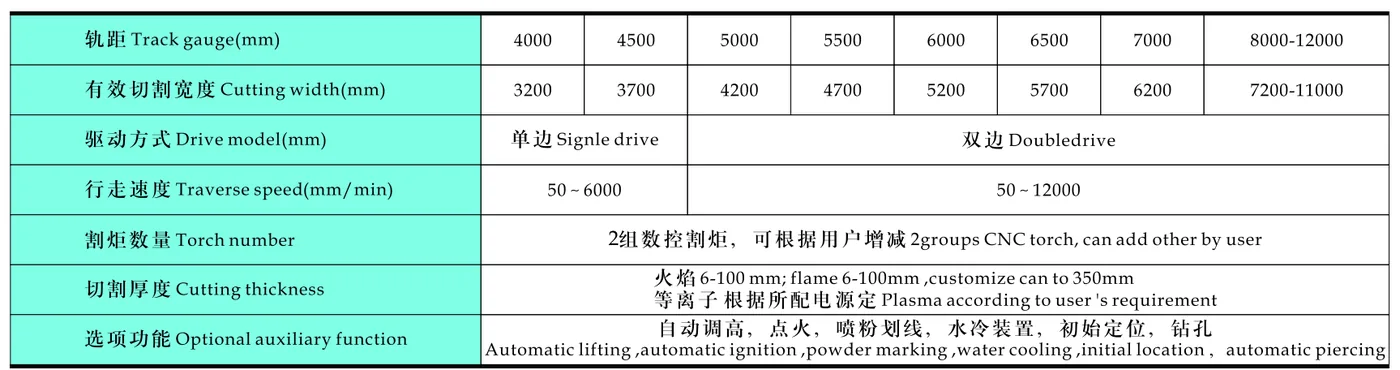
The figures below are the CNC30 configuration — the smaller machine in the same family as CNC40 — and they are the numbers to measure a requirement against, because they show what each specification line actually buys.
| Parameter | CNC30 value | What it constrains in practice |
|---|---|---|
| Guide rail length | 8,000 mm | Maximum plate length that can be cut in one pass |
| Track width | 3,000 mm | Sets the widest plate the gantry spans |
| Effective cutting scope | 6,400 mm | Usable cutting length after the machine's own dead travel |
| Cutting width, single torch | 2,400 mm | Width per pass — wider work needs multiple torches or a second pass |
| Cutting speed | 50 – 1,000 mm/min, stepless | Process window: flame needs slow, plasma tolerates fast |
| Travel (rapid) speed | 6,000 mm/min | Non-cutting positioning time between cuts |
| Cutting thickness — plasma | 6 – 25 mm | With plasma torch, PMX125; pierce thickness up to 25 mm |
| Cutting thickness — flame | 25 – 100 mm | With one group of flame torches |
| Surface quality of cut | ≥ Ra 12.5 | Roughness of the cut face; below this the edge needs dressing before welding |
| Positioning accuracy | ±0.5 mm / 1,000 mm | Dimensional tolerance on the blank — this is what the fit-up inherits |
| CNC controller | CCM3 | Determines nesting, kerf compensation and file format support |
| Cutting gas | Oxygen | Flame cutting; plasma needs its own gas supply |
| Standard | JB/T 5102-1999 (accuracy), JB/T 5101 (air-tightness) | The Chinese machine-tool standards the machine is built to |
| Working condition | 0–45 °C, RH ≤ 90% | Shop environment envelope |
| Input power | 1PH AC 240 V / 3PH AC 380 V, 50 Hz | Stated per order — confirm against site supply |
What is supplied and what is built on site
The machine-to-site boundary is worth knowing before comparing quotations, because it is where cost surprises appear. Supplied with the machine: main beam and torch carriage, longitudinal rail and accessories, steel-band transmission unit, torch lifter, CNC operating box, gas source control panel, transverse drag chain and main power boom.
Prepared by the customer: the support beam, the longitudinal cable slides, and the cutting table. Those three items are structure, not machine, and a quotation that does not mention them is not necessarily cheaper — it just has not priced them yet.
Why the accuracy figure is the one to hold on to
±0.5 mm per 1,000 mm sounds generous on a 1 m part. On a 6.4 m cut it is the tolerance stack that matters, because the error accumulates along the cut and the fit-up has to absorb it. This is exactly why a cut edge is not a weld preparation on code work: a cut held to half a millimetre per metre is fine for a blank, and not fine for a root face. Where the bevel has to be right, the edge is milled afterwards.
Specifying a CNC40
We need: plate thickness and material range, maximum plate size and weight, cutting process required (flame, plasma or both), required accuracy and cut quality, expected throughput, available floor area, and whether nesting software and a downdraft or water table are required. Cutting tables are configured against the plate list rather than supplied from stock.
Minimum order quantity is 1 set. Standard machines ship in 30–50 days after deposit; custom table sizes and extraction arrangements are scheduled in the technical proposal. Payment terms are T/T; trade terms are FOB, FCA or CIF. Core ranges are CE compliant and supplied against a certificate of compliance.
Plate processing equipment is supplied under the DESAN brand by DESAN ELECTRIC LTD, which has served 1,000+ customers in 20+ countries over 20+ years with welding engineering experience since 1997. For weld-quality bevels after cutting, see the GD20 rolling cutting and beveling machine and the plate edge milling machine.