
Welding Industry Shift from Experience to Data-Driven
Once upon a time, mentioning welding conjured up images of blinding arc light, drifting smoke and fumes, and the sweat-soaked work clothes of veteran welders. In that era, welding was a “craft” built on muscle memory and experience accumulated over the years.
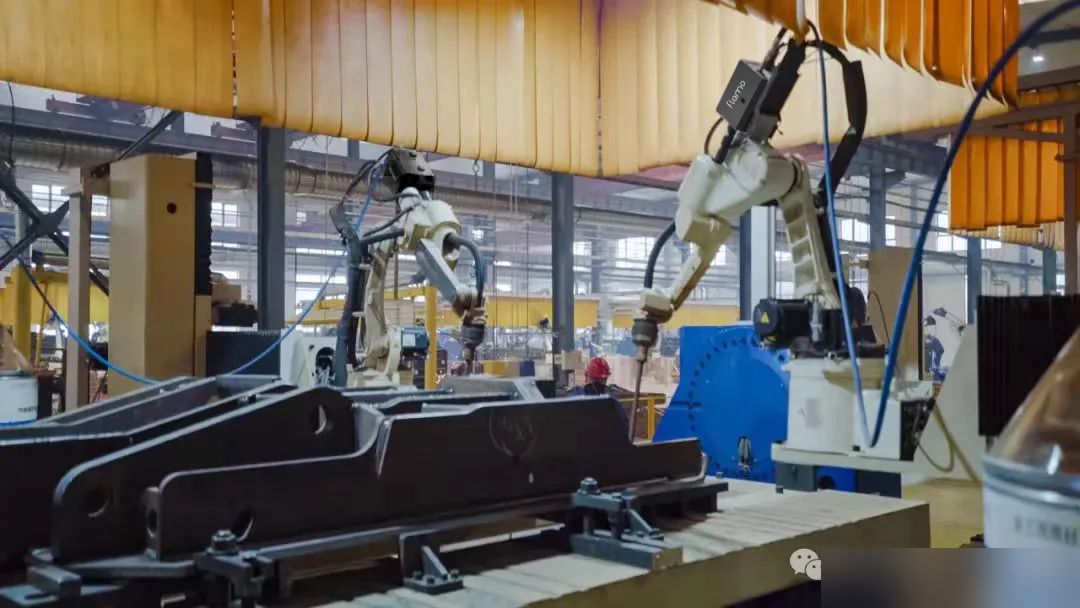
Today, however, stepping into a modern smart factory reveals a very different scene: robotic arms quietly swinging welding torches, lasers completing precision joints in milliseconds, and big-data platforms monitoring the quality of every weld in real time. The market is changing, applications are changing, and the “rules of the game” for welding are changing too.
I. The Market’s “Fire and Ice”: Zero-Sum Competition in General Fields and the Rise of Emerging Tracks
The welding market today is clearly polarized.
Traditional fields — ordinary steel structures, construction, and low-end component processing — are caught in fierce “red ocean” competition. Low-end welding machines are highly homogenized, and price wars break out one after another. The old formula of “master one trick and prosper” no longer works in an age of cost transparency. Enterprises face the “three mountains” of difficulty in recruiting workers, high labor costs, and low efficiency.
Emerging tracks, by contrast, are entering a phase of rapid growth.
- New energy: Demand for power battery welding — especially laser welding of highly reflective materials such as aluminum and copper — is growing rapidly. With the industrialization of 4680 large cylindrical cells and solid-state batteries, welding precision, efficiency, and reliability are being held to micron-level requirements.
- Lightweighting of new energy vehicles: Body joining after integrated die casting, plus arc welding and laser welding of aluminum-magnesium alloys, has become a key technology battleground for automakers competing on driving range.
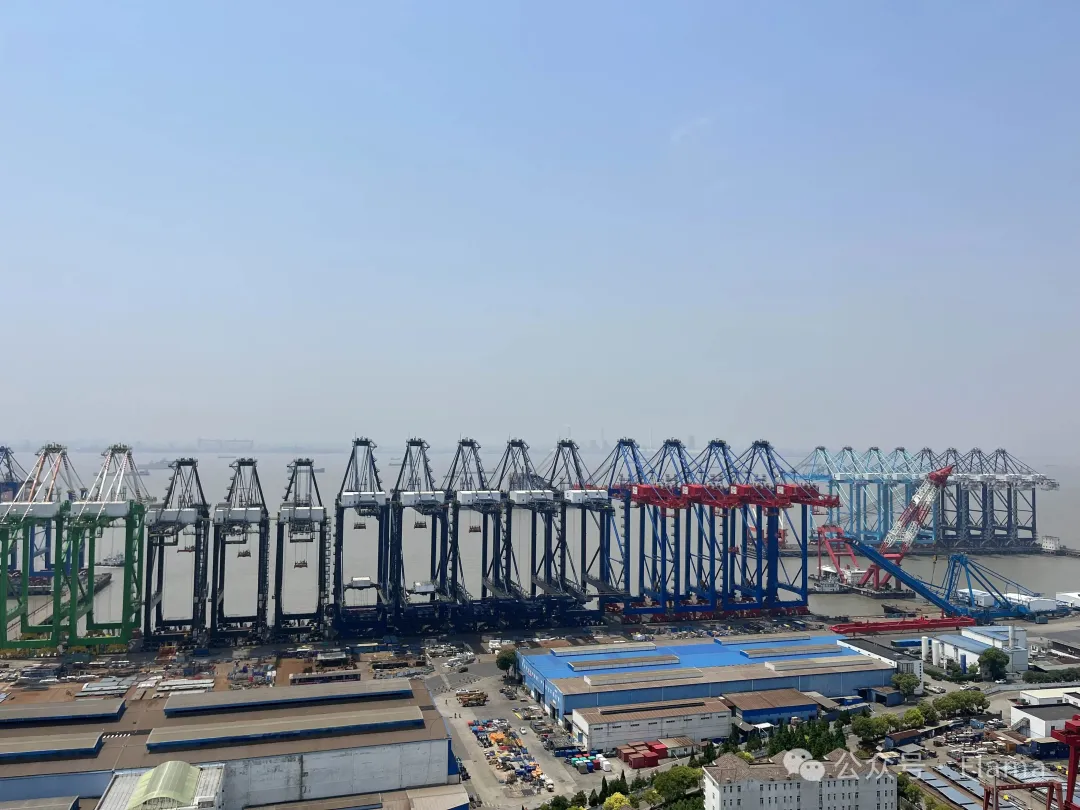
- Shipbuilding and marine engineering: Driven by the global shipping cycle renewal and energy security demand, order books for large vessels and LNG carriers are full, and the demand for automated welding of high-strength steel and thick plates is strong.
- Semiconductors and precision manufacturing: Precision spot welding and ultrasonic welding in IGBT module and sensor packaging have taken welding into the “electron microscope” era.
In a word: if you still rely on stacking more manpower to make money, it will only get harder; if you can master “new energy, new materials, and high precision,” the market dividend is just beginning.
II. Technology Trends: Three Major Technologies Reshaping the Industry Landscape
Welding in the future is no longer an isolated “point heat source,” but a core “process island” within smart manufacturing systems. The following technology trends are reshaping the industry’s competitive landscape:
1. Laser Welding: Down-Market Penetration and Up-Market Advancement
Laser welding was once the “luxury item” of high-end manufacturing. Today, as domestic fiber laser prices have fallen sharply, laser welding is accelerating its replacement of traditional TIG and resistance welding.
- Down-market penetration: Handheld laser welders have become the “new standard equipment” of small and medium fabrication shops, delivering 5–10 times the efficiency of traditional TIG welding, with less distortion and easy operation.
- Up-market advancement: At the high end, hybrid welding (laser + arc), blue laser welding (addressing the pain point of highly reflective materials), and femtosecond laser welding are tackling challenges such as dissimilar metal joining and brittle material joining.
2. Automation and Intelligence: From “Having It” to “Having It Done Well”
Simply “replacing people with robots” is no longer enough. The core now is “machines with eyes and a brain.”
- Seam tracking and adaptive control: Today’s intelligent welding robots use structured-light vision to detect fit-up deviations in workpieces and adjust torch posture and process parameters in real time. Work that once required a master craftsman’s “touch-up” is now performed more consistently by machines.
- Teach-free programming: For small-batch, high-mix steel structures and ship sections, teach-free technology is developing rapidly. AI algorithms automatically identify the workpiece type and plan the welding path, effectively solving the pain point that “programming takes longer than welding.”
3. Digitalization: From “Blind Welding” to “Transparent Factory”
The biggest pain point in welding quality is “non-traceability.” Today, welding cloud platforms are becoming widespread. Current, voltage, wire feed speed, gas flow rate, and even on-site temperature and humidity are all uploaded to the cloud. Managers can monitor the “health status” of every workstation in real time from their offices.
Even more important is “quality prediction.” By collecting electrical, acoustic, and optical signals during welding, AI models can identify weld defects (such as porosity and spatter) in real time, enabling “inspect as you weld” — a fundamental change from the lagging traditional model of “weld first, radiograph later.”
III. New Application Frontiers: Which Segments Deserve Attention?
Based on current market dynamics, the following three segments deserve close attention from welding professionals:
1. “Machines Replacing Workers” in Shipbuilding
The shipbuilding industry has seen full order books in recent years, but its welder workforce is aging seriously. Large sub-assembly robotic welding stations and gantry-type multi-axis welding robots are becoming sought-after equipment in shipyards. Whoever can provide automated welding solutions that are stable, efficient, and adaptable to cramped cabin spaces will capture this round of infrastructure dividends.
2. Energy Storage and Hydrogen Energy
Sheet-metal welding of energy storage cabinets, friction stir welding of liquid-cooled plates, and precision welding of hydrogen fuel cell bipolar plates. These applications demand not only weld quality but also extreme cleanliness and leak-tightness, setting higher standards for precision control of welding power sources and the cleanliness of the welding environment.
3. High-Efficiency Construction Steel Structures
Although the real estate sector has cooled overall, high-end commercial landmarks, large venues, and prefabricated buildings are still moving forward. The market is no longer satisfied with ordinary CO2 gas-shielded welding; it is pursuing “high-efficiency welding”: twin-wire welding, triple-wire welding, and high-deposition-rate technologies, all aimed at compressing construction time and cost through maximum efficiency.
IV. The Way Forward: How Should Welding Professionals Build New Capabilities?
Facing a changing market, both enterprises and practitioners need to develop new capabilities.
- For enterprises: Do not just sell equipment — sell “process solutions.” What customers lack is not a welding machine, but the ability to “weld this piece of aluminum properly and leak-free.” Building a closed service loop of “equipment + process + data” is the way to establish a competitive moat.
- For welders and engineers: Pure physical labor will be replaced by automation, but composite talent who “understand processes, robots, and digitalization” will become increasingly valuable. The welder of the future may no longer need to hold a welding helmet, but will need to know how to commission robots, tune laser parameters, and read data analysis reports.
Conclusion
Welding is the “tailor” of industrial manufacturing.
Amid the Industry 4.0 wave, this “tailor” is putting on a “smart” coat. The welding market today holds both difficulties and opportunities. Old maps cannot discover new continents; those who cling to traditional “craft-only” thinking may be left behind by the times, while those who embrace automation, digitalization, and new material processes are entering the golden age for welders.
A storm rises from the tips of grass blades; waves form in the ripples between them. The future of welding lies not only in the sparks, but in the connection between data and intelligence.