
Welding Enters the Era of the Internet of Everything
With new materials and new processes emerging one after another, welding technology is undergoing a profound digital and intelligent transformation. As an important direction in the welding power source field, the deep integration of IoT technology with welding equipment is redefining the production model of traditional welding workshops. Among these developments, group-controlled welding systems with integrated IoT technology have become a core driving force behind the transformation and upgrading of the industry.
Where Do the “Pain Points” of Traditional Welding Workshops Lie?
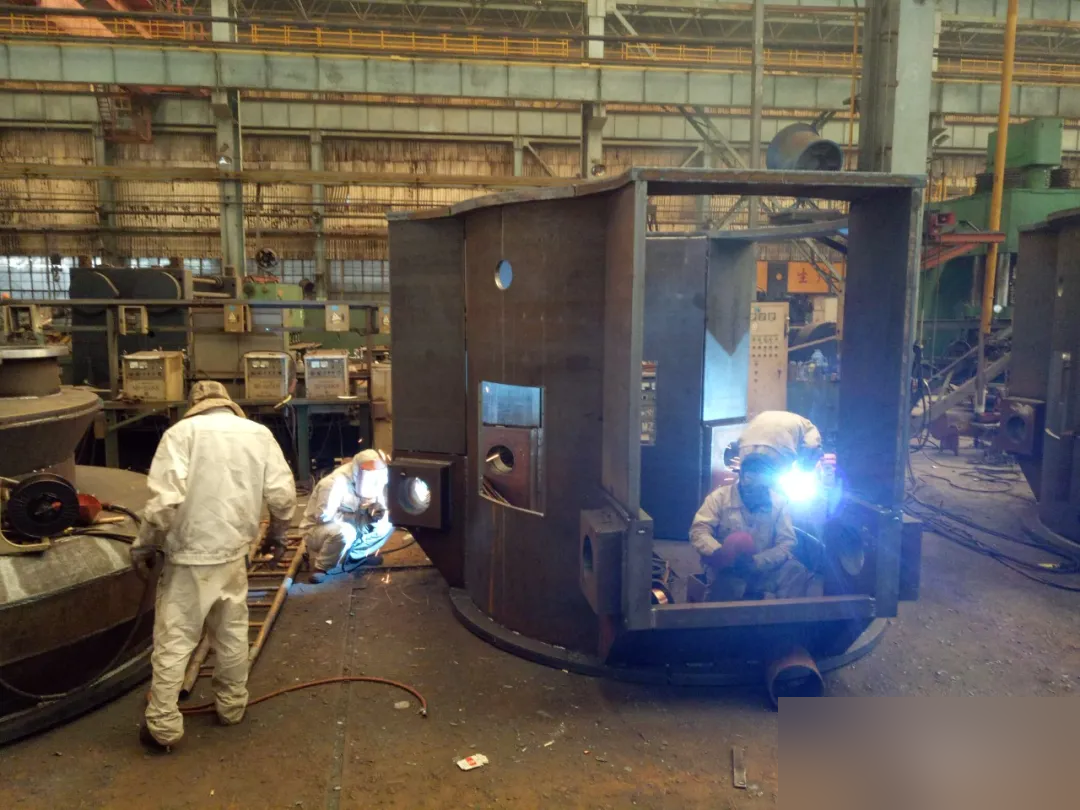
Under traditional production models, welding workshops often face many challenges:
- Difficult equipment management: Welding power sources are scattered, and parameter adjustment relies on manual operation with low efficiency;
- Weak quality control: Welding process data lacks real-time collection and monitoring, making quality issues difficult to trace;
- Low production efficiency: Equipment status cannot be monitored in real time, fault response is slow, and overall output is affected;
- Coarse cost control: Statistics on energy consumption and consumables lag behind, leaving cost control without data support;
- Difficult process optimization: Without big data support, process improvement relies on the experience of veteran workers.
Group-Controlled Welding Systems: The “Smart Brain” of the Welding Workshop
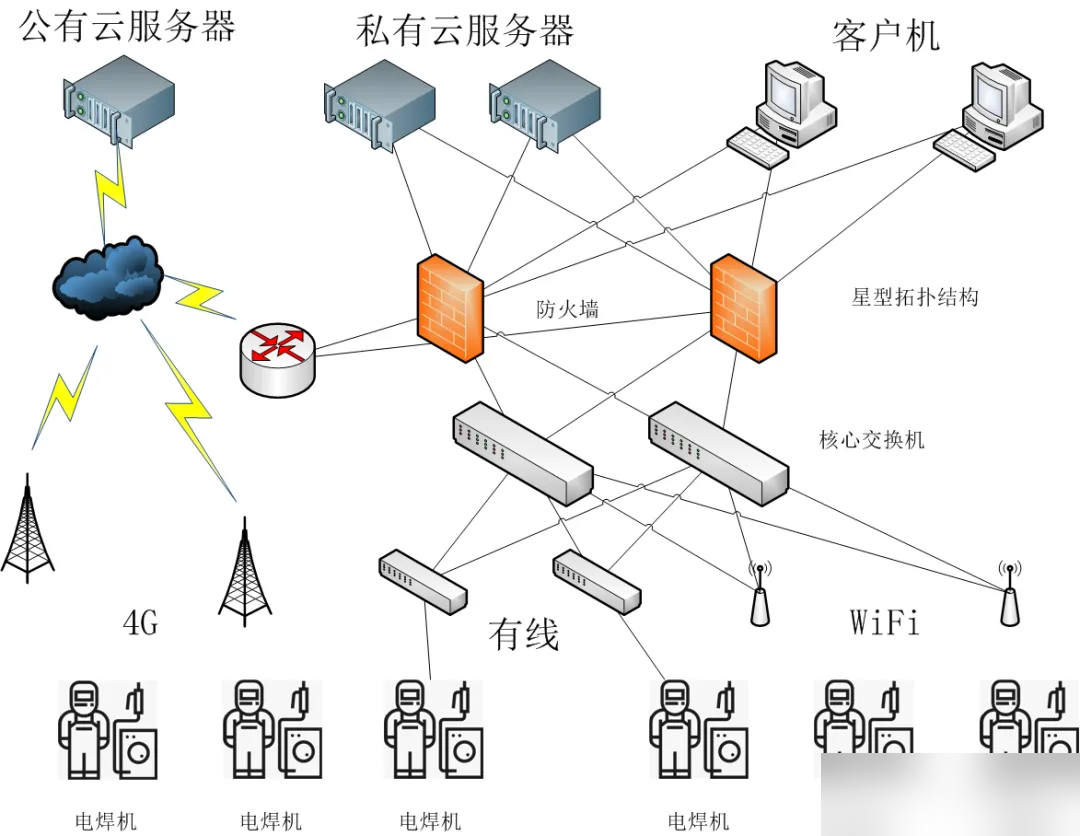
IoT-based group-controlled welding systems use IoT technology to connect all welding equipment in a workshop into an intelligent network, enabling centralized monitoring, data collection, and intelligent analysis. The system consists of three main parts:
- Device layer: Intelligent welding power sources with integrated IoT modules;
- Transmission layer: Industrial gateways and factory network systems;
- Platform layer: Group control management system software platform.
Four Core Values of Group-Controlled Welding Systems
1. Production Visualization: Real-Time Visibility of the Overall Status
The system displays in real time via electronic Kanban boards:
- The power-on rate and utilization rate of all equipment in the workshop;
- The progress and completion status of current production tasks;
- Equipment status (normal, alarm, standby, fault);
- Real-time monitoring of energy consumption data.
2. Process Standardization: Ensuring Consistent Quality
- Centralized parameter management: Welding process parameters are issued uniformly through the group control system, preventing arbitrary adjustment by workers;
- Process traceability: The parameters of every weld point are recorded and stored, allowing precise tracing of quality issues;
- Intelligent optimization: Based on big data analysis, process parameters are continuously optimized to improve weld quality.
3. Intelligent Operation and Maintenance: Predictive Maintenance for Cost Reduction and Efficiency Gains
- Equipment health monitoring: Real-time monitoring of the status of key components to provide early warnings of potential faults;
- Maintenance reminders: Maintenance plans are automatically generated based on equipment operating hours;
- Remote diagnostics: Technical support personnel can access equipment remotely to resolve problems quickly.
4. Refined Management: Data-Driven Decision-Making
- Working-hour statistics: Automatic recording of the effective welding time of each machine and each worker;
- Cost analysis: Precise calculation of energy and consumable costs per meter of weld;
- Efficiency analysis: Identification of production bottlenecks to optimize resource allocation.
Conclusion
A group-controlled welding system is not a simple connection of equipment, but a profound transformation of the production management model. It turns the welding workshop from a traditional “black box” operation into a transparent, digitalized, and intelligent modern manufacturing unit.