
Welding AI from the World AI Conference Perspective
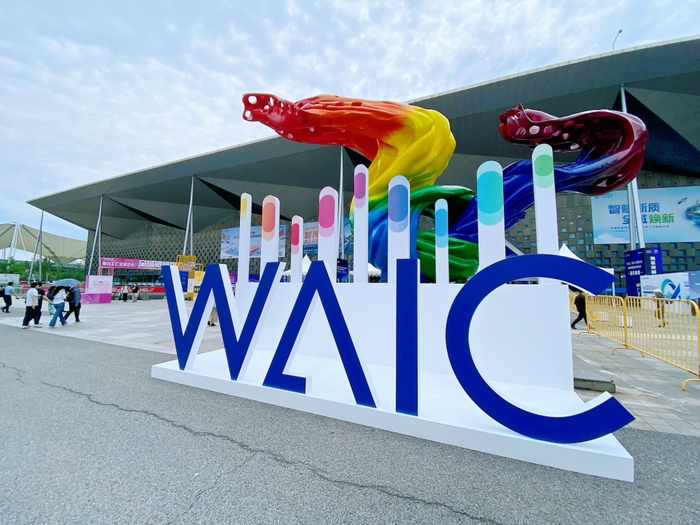
The 2026 World Artificial Intelligence Conference (WAIC) is being held in Shanghai. A 100,000-square-meter exhibition hall, 1,100 companies, 300 globally debut products. Humanoid robots have entered factories, industrial world models have emerged, and AI agents have gone commercial…
But when we turn our attention back to the welding workshop: What has AI actually brought to welding robots? Is it a real technological transformation, or just another round of concept hype?
Today, setting aside the noise of the conference, let’s talk about the four most practical truths about welding AI.
Reality 1: Can AI Welding Robots Program Themselves?
No! But they can make programming 10 times faster.
This is the biggest misunderstanding of all.
Many people hear “AI teach-free” and imagine a robot standing in front of a workpiece, taking one look, and welding it by itself.
The reality is that AI provides “assisted programming,” not “no programming at all.”
Using traditional methods, a workpiece of moderate complexity (20–40 welds) typically takes an engineer 2–3 days of point-by-point teaching and parameter tuning with a teach pendant.
With a system equipped with 3D vision and AI algorithms, scanning the workpiece, recognizing the welds, and auto-generating the path can compress first-article setup time to under 2 hours.
Is that fast? Very fast.
But it still needs people — people to confirm that the weld recognition is correct, the process parameters are reasonable, and the torch posture is right. AI produces the “draft”; the final call is still made by humans.
Key takeaway
Do not expect an AI welding robot that “works right out of the box” — no such product exists yet. The value of AI is freeing engineers from tedious point-teaching, so that a programming engineer who used to handle 10 workpieces a month can now handle 30. Investing in AI is investing in human efficiency gains, not human replacement.
Reality 2: Does AI Weld Better Than Humans?
Not necessarily! But it welds more consistently than humans.
When it comes to weld quality, comparing top welders with AI is not about “who welds better,” but “who welds more consistently.”
A master welder in top form can produce welds more beautiful than a robot — in bead appearance and defect control, AI may never catch up.
But the problem is — people have good days and bad days, mood swings, fatigue, and lapses in concentration.
Welding well on day one does not mean welding well on day one thousand; Master Zhang welds well, but that does not mean Master Li will too.
An AI welding robot is different. Its 1st weld and its 10,000th weld are identical in current, voltage, speed, and posture, down to the last detail.
That is the fundamental difference between humans and machines: humans compete on their ceiling, machines on their floor. And industrial production needs exactly that floor — a stable pass rate, a stable delivery cycle, and a stable cost structure.
Key takeaway
If your products depend entirely on a few top welders and suffer from large quality fluctuations and high rework rates, an AI welding robot can help raise your “floor.” But if what you pursue is the “ceiling” of extreme craftsmanship, AI cannot yet replace the hands of veteran welders.
Reality 3: Is Today’s Welding AI Real AI?
Not entirely! Most of it is “perceptual intelligence” — “decision intelligence” is still far off.
The word “AI” has been overused this year.
Strip down the vast majority of products marketed as “AI welding robots,” and their core consists of these layers:
Layer 1: Seeing — visual recognition. A laser scan identifies where the seam is, how wide the groove is, and how big the gap is. This is perception; currently about 90% of “AI welding” sits at this layer.
Layer 2: Following — real-time tracking. During welding, deviations are corrected automatically and parameters are adjusted automatically as the weld bead changes. This is feedback control, and few vendors do it well.
Layer 3: Reasoning — process decision-making. Based on the workpiece material, plate thickness, and requirements, the system selects the process, tunes parameters, and predicts defects on its own. This is the real AI — deep learning from massive data, self-evolving. Across the industry, this is still in the exploration stage and far from widespread.
To be honest, “AI welding” on the market today is more accurately described as “adaptive welding with visual perception.” It is useful, but it still has a long way to go before it becomes true AI.
Key takeaway
When selecting equipment, do not pay extra just for the word “AI.” Ask three questions: What is the visual recognition accuracy? How fast is the tracking response? How many process database cases from your industry are included? Usable, reliable, and durable — that is what really matters. However dazzling the concept, it means nothing if it cannot deliver in practice.
Reality 4: Is AI Welding Suitable for Every Factory?
Of course not! Choose the right scenario and it works wonders; choose wrong, and it becomes a showpiece.
AI welding is not a panacea — it is very picky about scenarios.
Factories that are a good fit:
✅ Workshops with small batches and high product variety. Every changeover requires reprogramming, and that is exactly the time AI saves. For shops that switch between dozens of workpieces a month, the return on investment adds up.
✅ Factories with a certain process foundation. Only when your own process system and parameter specifications are established can AI deliver its value. If your processes are a mess, AI will not help.
✅ Companies short of skilled welders. If recruiting is hard, retention is hard, and labor costs keep rising, use robots to take over repetitive work, free up your people, and let them move to higher-value tasks.
Factories that are not a good fit are equally clear:
❌ Large-batch, single-variety production. If a production line runs the same product for half a year without changeover, traditional taught robots are sufficient — the AI premium is a pure waste.
❌ All-irregular or fully custom parts. No two welds are the same; AI cannot learn them, and manual work remains more flexible.
❌ Small workshops without even basic digitalization. If equipment data cannot be collected and process parameters are not standardized, AI will have nothing to work with.
Key takeaway
Before adopting AI welding, take stock of your own situation — what are your products? What level are your workers? What stage are your processes at? If you are a good fit, adopt early and benefit early; if not, do not rush — build a solid foundation first. It is good technology, but it only works when applied in the right place.
Conclusion
WAIC is lively, but the welding workshop is down-to-earth.
AI will not transform the welding industry overnight, but it is quietly changing the rules of the game.
It does not replace people; it makes people more valuable. It does not guarantee the best weld, but it guarantees a consistent one. It is not an all-purpose AI, but a practical perceptual intelligence. It is not for everyone — but those it suits should act early.
The heat of the conference will fade, but technological progress will not stop.
From WAIC 2026 to your workshop, the gap is not technology — it is awareness.
May you, in this wave of AI, not be swept along by concepts, not pay for anxiety, and steadily — choose what is right, use what is right, and weld an even stronger future.