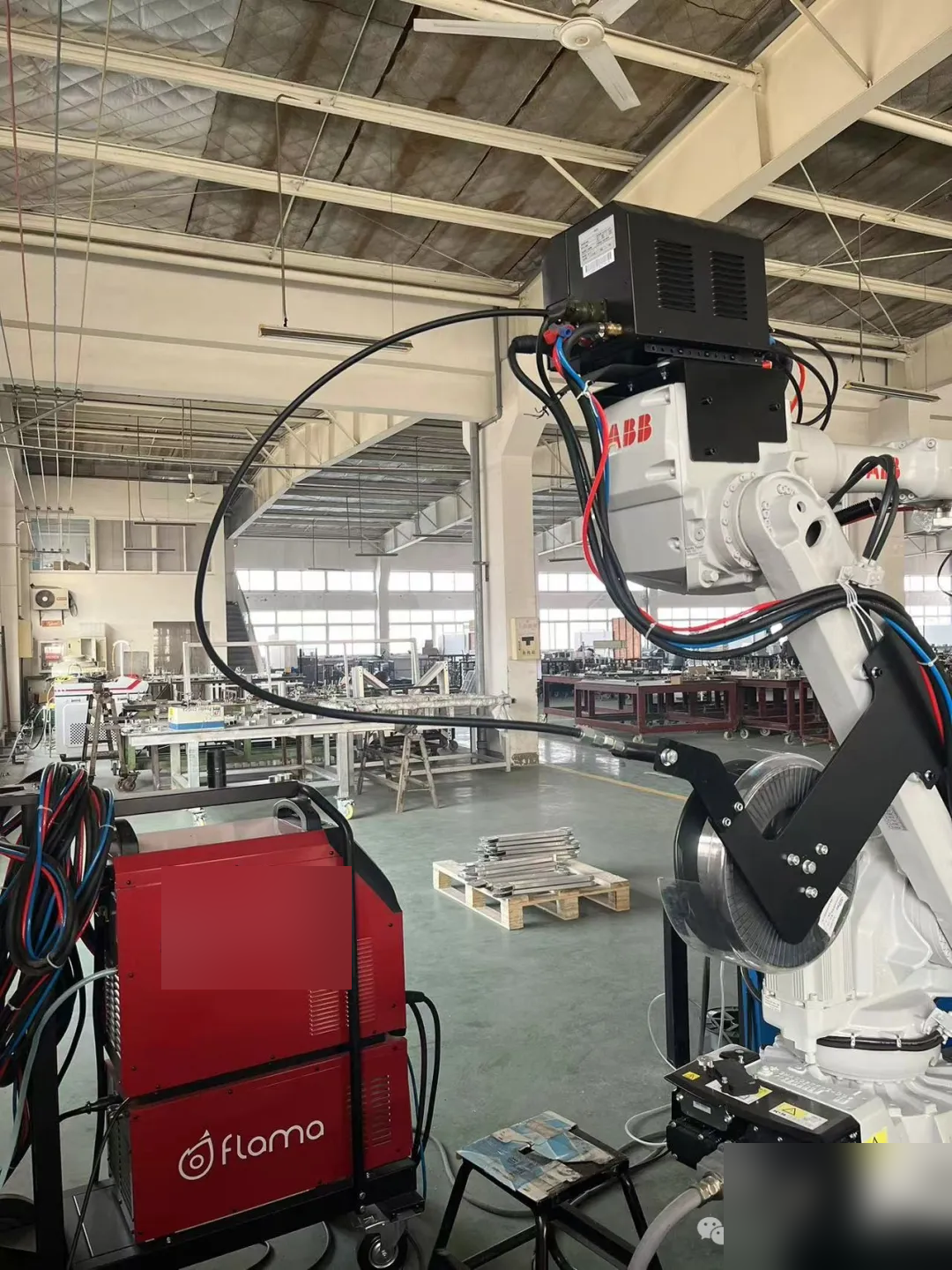
Smart Welding Power Sources Breaking Efficiency and Quality Bottlenecks
As manufacturing transformation and upgrading accelerate, the welding robot market is growing rapidly. Data shows that China has become the world’s largest welding robot market, with an annual growth rate of over 20%. More and more manufacturing enterprises are introducing welding robots, expecting to achieve welding automation, improve production efficiency, and stabilize product quality.
In practice, however, many enterprises have found that “the robot is in place, but the welding problems remain.” Excessive spatter, poor weld bead formation, tedious process parameter adjustment, and poor adaptability to different materials — these problems from conventional welding still exist in robotic welding and are even amplified by automation.
The core of the problem often lies not in the robot itself, but in its “heart” — the welding power source and welding process.
Pain Points: Why Has Welding Process Become the Integrators’ “Achilles’ Heel”?
Through collaboration with leading robot integrators, we have identified the following recurring problems:
- “Process experience is hard to reuse”: Different materials, thicknesses, and working conditions require repeated trial and error, consuming time and materials;
- “Obvious technical gap”: Commissioning engineers understand robot programming but lack systematic knowledge of process details such as penetration control and gas mixture ratios;
- “No solution for special scenarios”: Welding of aluminum-magnesium alloys, high-strength steel, and other materials is unstable, and customer complaint rates remain high.
Conclusion: The value of a welding robot = hardware precision × process adaptability. Process weaknesses are eroding integrators’ profits and reputation.
Solution: Upgrading from a “Welding Power Source Supplier” to a “Welding Process Enabler”
1. Smart Process Database: One-Click Matching of Welding Parameters
- Database of 3,000+ welding scenarios: Covers 6 major material categories including carbon steel, stainless steel, and aluminum alloy, and supports 12 welding positions such as flat, vertical, and fillet welding;
- Cloud sharing platform for processes: Integrators can upload/download process cases, building internal knowledge accumulation within their organizations.
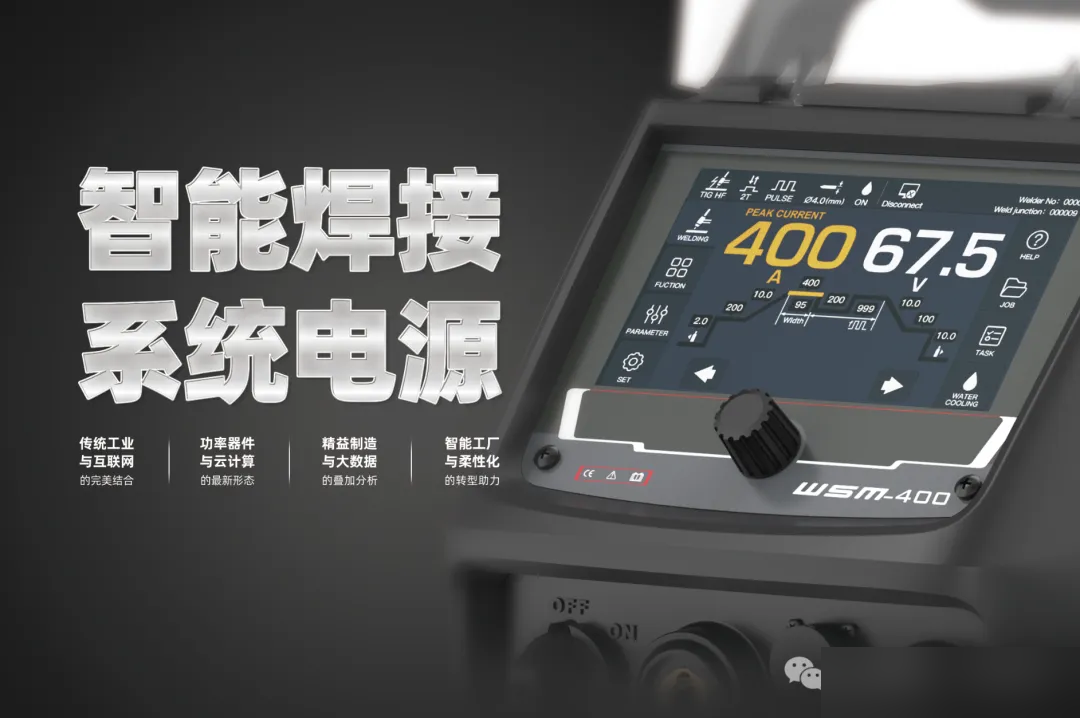
2. Customized Welding System Integration
- Deep coordination between welding machine and robot: Through customized communication protocols, functions such as arc tracking and arc-start seam finding respond to the robot’s motion trajectory within milliseconds;
- Targeted solutions for complex scenarios: For challenges such as multi-layer welding of thick plates and high-speed welding of thin plates, packaged solutions of “equipment + process + consumables” are provided;
- Modular design: Supports rapid expansion of peripheral equipment such as laser vision, torch cleaning stations, and fume extraction, reducing secondary integration costs.
3. Technical Empowerment System: Teach People to Fish, Not Just Give Them Fish
- Welding process training camps: Quarterly “theory + hands-on” training covering practical skills such as defect analysis and process optimization;
- On-site support services: Process engineers are dispatched at key project milestones to assist with commissioning, ensuring one-pass acceptance at the customer site;
- 24/7 remote diagnostics: Welding data is monitored in real time through an IoT platform to provide early warnings of potential issues.
4. Full-Process Service Assurance
- Forward-deployed spare parts warehouse network: Warehouses stock 2,000+ commonly used spare parts, with 2-hour response for urgent needs;
- Customer success case library: Benchmark cases from industries such as automotive parts, construction machinery, and aerospace are provided for reference;
- Co-branded marketing support: Customized technical white papers and application videos for integrators help enhance their market competitiveness.
Case Study: A Leading Integrator’s “Worry-Free Transformation”
Customer background: An integrator supplying automotive parts, running an aluminum welding workstation, with robot welding pass rates hovering around 85%.
Solution:
- Matched a digital AC/DC TIG welding dedicated process package;
- Integrated unique high-frequency arc starting that reduces high-frequency interference to the robot;
- Provided on-site training by welding technicians.
Results: The welding pass rate increased to 98%, project acceptance cycles were shortened by 40%, and the customer’s annual repeat order rate reached 100%.
Win-Win Cooperation: Let Professionals Stay Focused
The core value of robot integrators lies in “system integration capability and customer resources,” not in getting bogged down in the “detail swamp” of welding processes. Our mission is:
- ✅ To be the “welding process brain” behind you — providing standardized solutions that stand up to verification;
- ✅ To be your on-call “technical backup” — winning customer trust with fast service response;
- ✅ To be your “strategic partner” for long-term growth — jointly exploring high-end welding application scenarios.
Conclusion
Welding robots represent “automation,” while smart welding power sources give robots “intelligence.” Only their deep integration can truly unleash the full potential of welding automation.
As technical experts who have been deeply engaged in welding power sources for years, we remain committed to solving real problems in welding production. Whether you are at the planning stage of welding automation or already using welding robots and encountering bottlenecks, we can provide professional technical consultation and solutions.
Make every weld stable and reliable, and make every robot deliver maximum value — this is our commitment and an inevitable choice in the era of smart welding.