
Sheet metal work as a supporting capability, not a sideline
Welding equipment is built from a lot of sheet and plate that never appears in the brochure: control cabinets, terminal enclosures, cable trays, guards, covers, brackets and terminal boxes. Producing those in-house, to a consistent tolerance, is what allows a machine to be delivered complete rather than delivered with a list of parts to be sourced locally.
DESAN ELECTRIC runs sheet metal fabrication as an integrated capability covering laser cutting, CNC punching, bending, robotic and manual welding, foaming, surface treatment and assembly — for our own equipment and for customer enclosure work. Material coverage runs across stainless steel, galvanised sheet, aluminium, cold-rolled and pickled plate.
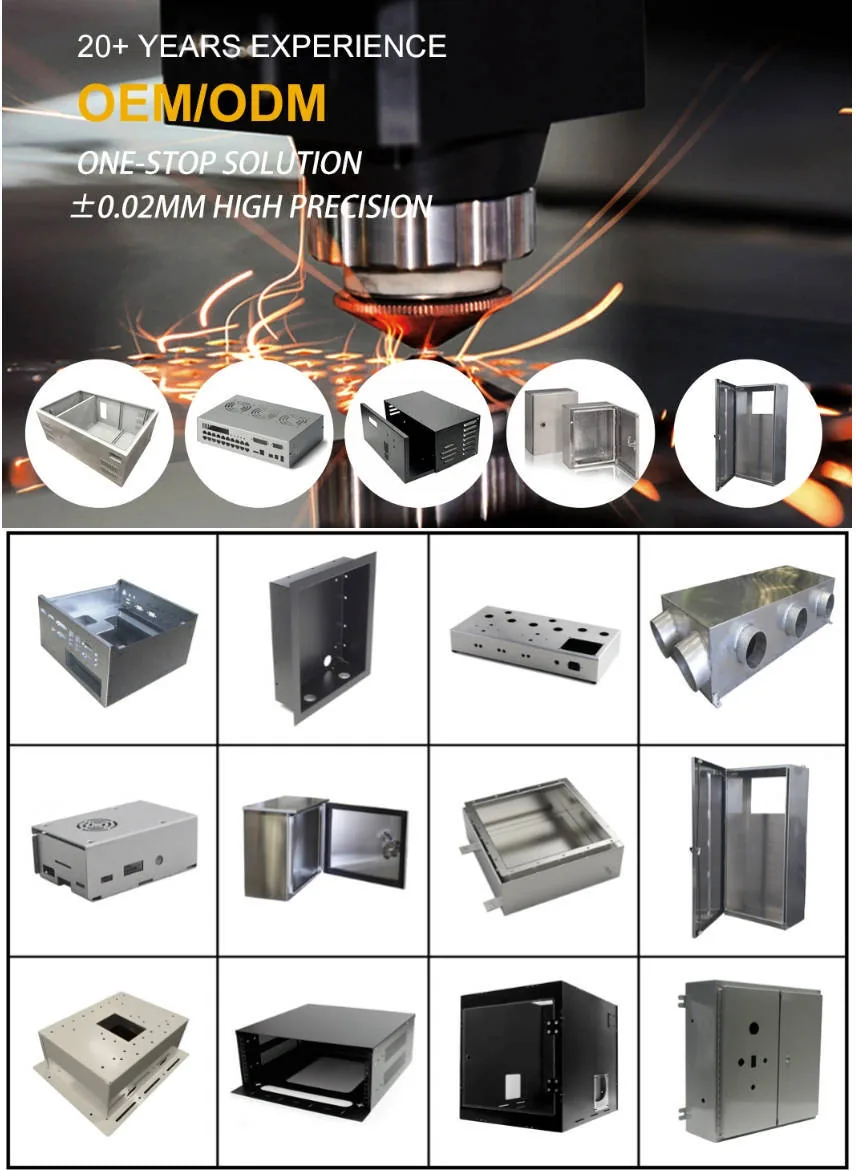
Process chain
| Step | Capability | What it controls downstream |
|---|---|---|
| Cutting | Laser cutting, CNC punching | Blank accuracy and hole position — every later tolerance is inherited from here |
| Forming | CNC press brake bending | Flange squareness; a 1° bend error becomes a visible gap at assembly |
| Welding | Manual TIG/MIG, robotic welding line, resistance spot | Distortion and finish — the dominant cost driver on thin sheet |
| Surface | Brushing, polishing, electrophoresis, anodising, powder coating, plating, laser engraving | Corrosion performance and appearance |
| Assembly | Foaming, gasket fitting, hardware, testing | Final IP rating and mechanical fit |
General tolerance is ±0.1 mm, with tighter tolerances quoted against the drawing where the application needs them.
Welding thin sheet without wrecking it
Enclosure work fails on distortion more often than on strength. A 1.5 mm stainless door panel welded along a full edge will bow, and the door will not close flat. The techniques that keep it straight:
- Heat balance. Weld alternately on opposite sides of the neutral axis, or sequence seams so shrink on one side cancels shrink on the other.
- Minimum fusion, not maximum. On 1–2 mm sheet, a full-penetration cosmetic bead is usually unnecessary; a smaller weld with correct penetration distorts far less.
- Backing and clamping. Copper backing bars pull heat out and hold the joint flat; strongbacks hold the panel until it cools.
- Tack sequence before continuous welding. A panel tacked from the centre outward closes gaps progressively; one tacked from the ends traps the gap in the middle.
- Robotic welding for repeat parts. On a family of enclosures, a robotic line with a fixed programme gives identical heat input on every part, which is the most reliable distortion control there is.
Enclosure boxes: what the customer actually needs specified
An enclosure is not just a welded box. The specification that decides whether it works in service includes: IP rating and whether the seams must be continuous-welded or gasketed to achieve it; material and finish (powder coat colour and thickness, or passivation for stainless); earth continuity between panels; cable entry arrangement and gland plate thickness; and whether foam or a gasket is used for sealing. Getting these settled before cutting avoids the common outcome where a finished box passes dimensional inspection and fails the IP test.
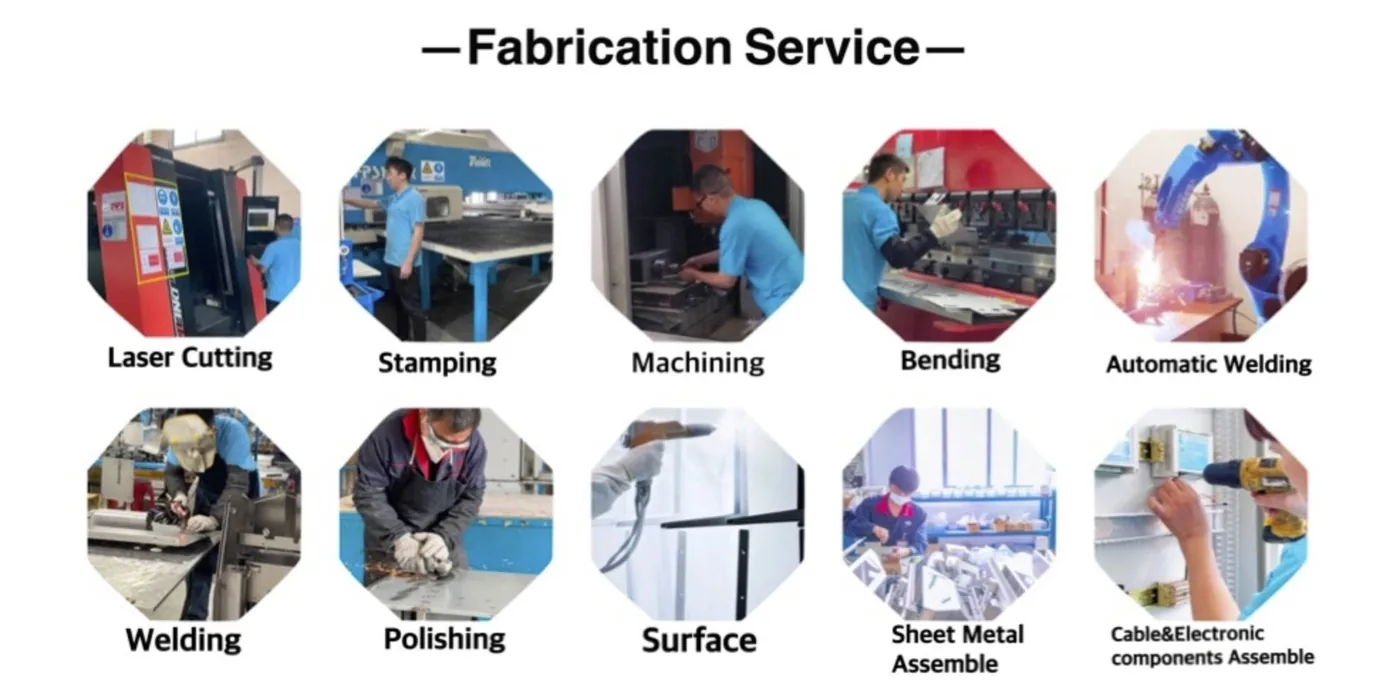
Where this capability supports welding equipment
On a welding positioner, rotator or manipulator the sheet metal content is substantial: the control cabinet, the pendant housing, the motor terminal covers, the cable management, the guards around rotating parts and the machine identification plates. Producing these to a consistent tolerance in-house is what allows the electrical and mechanical assemblies to be built in parallel and the machine to be tested as a complete unit before shipment.
Specifying sheet metal work
To quote fabrication we need: drawings (2D is enough, 3D preferred), material and thickness, quantities and whether the order is a prototype or a production run, tolerance requirements, surface finish and colour, IP or other sealing requirement, and the packing and delivery expectation. Prototype samples are accepted as a route to production orders.
Minimum order quantity is 1 set for equipment; sheet metal batches are quoted per part and volume. Standard equipment ships in 30–50 days after deposit. Payment terms are T/T; trade terms are FOB, FCA or CIF. Equipment is supplied with a certificate of compliance and is CE compliant for the core range.
DESAN ELECTRIC LTD has served 1,000+ customers in 20+ countries over 20+ years, with engineering experience since 1997, and supplies welding positioners, turning rolls, manipulators, robots and H-beam lines together with the sheet metal and control equipment that goes into them.