
Robot Substitution Limits Amid Welder Shortage
Date: 2026-07-26
There is a well-known phrase in the industry: the “welder shortage.”
Fewer and fewer people are entering the welding trade — young workers are reluctant to join the workshop, and veteran welders are retiring one after another.
As a result, hopes have increasingly been pinned on robots — “robots replacing welders” has almost become an industry consensus.
But the reality is this: after more than a decade of talk, the penetration rate of welding robots remains painfully low.
It is not that the technology is inadequate, nor that the price is too high.
The real bottlenecks are far more complex than most people imagine.
▲ Human-robot collaboration is becoming the new normal on welding shop floors
Difficulty 1: Fixtures and Jigs — the Biggest Cost Trap
Most people assume the robot itself is the most expensive item; in fact, the fixtures are the real money pit.
Many people think that buying a robot and pairing it with a welding power source is enough to start production. Wrong.
Where welding robots actually cost money is not the robot body — it is the fixtures and jigs.
To put a workpiece on a robotic welding line, you first need a dedicated fixture to clamp the workpiece rigidly in place — if the position is off by 1 mm, the weld seam shifts. Change the workpiece, and you need a new set of fixtures.
Small-batch, multi-variety scenarios? A single fixture set can cost tens of thousands of yuan, and switching production lines with fixture changeover takes two to three days — the cost simply cannot be justified.
This is why robots weld like crazy in the automotive and home appliance industries, while in shipbuilding, steel structures, and nuclear power, robotic welding has never taken off — the workpieces are too varied, and fixture costs are prohibitive.
💡 Key takeaway
Before adopting robots, factor the fixture cost into your calculation.
If you have many workpiece types and small batch sizes, the robot’s payback period may be far longer than you expect.
The robot body is only the entry fee; fixtures and system integration are the bulk of the investment.
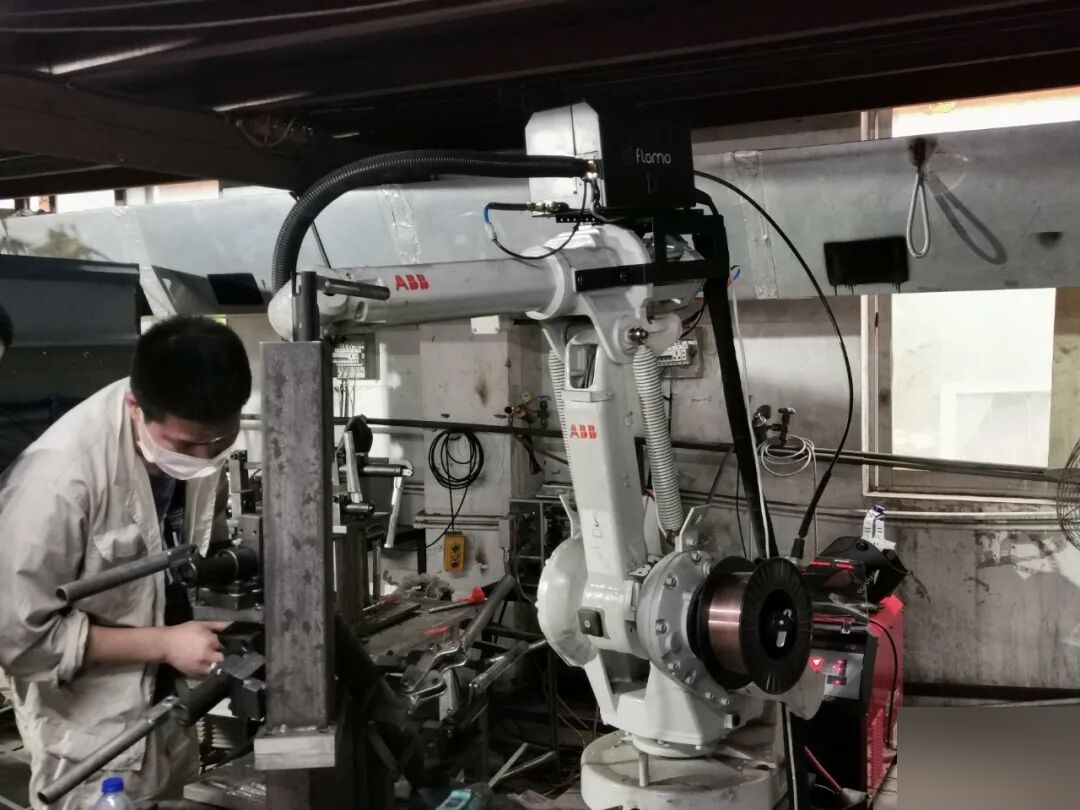
▲ The complexity of fixtures and jigs often determines the success or failure of a robotic welding project
Difficulty 2: Teaching a Workpiece Takes Longer Than Welding It
A job that takes an experienced welder half an hour may take the robot half a day to set up.
A robot does not know where to weld on its own.
Someone has to “teach” it — holding the teach pendant and guiding it point by point along the trajectory. For a complex workpiece, teaching can take most of a day.
What about manual welding? The welder picks up the torch and gets to work — done in half an hour.
In small-batch scenarios, robots are actually less efficient than people.
Offline programming and weld seam scanning can theoretically solve this problem. But once you get to the shop floor, you find that workpieces lack dimensional accuracy, assembly tolerances are large, and the seam position changes every time — after all the scanning back and forth, manual touch-up is still required in the end.
💡 Key takeaway
Do not look only at the robot’s welding speed — include “setup time” in the calculation.
If your batch sizes are small and changeovers frequent, teaching time will eat up all the efficiency advantages.
To decide whether to adopt robots, first work out: how many times a workpiece must be welded, and how long setup takes.
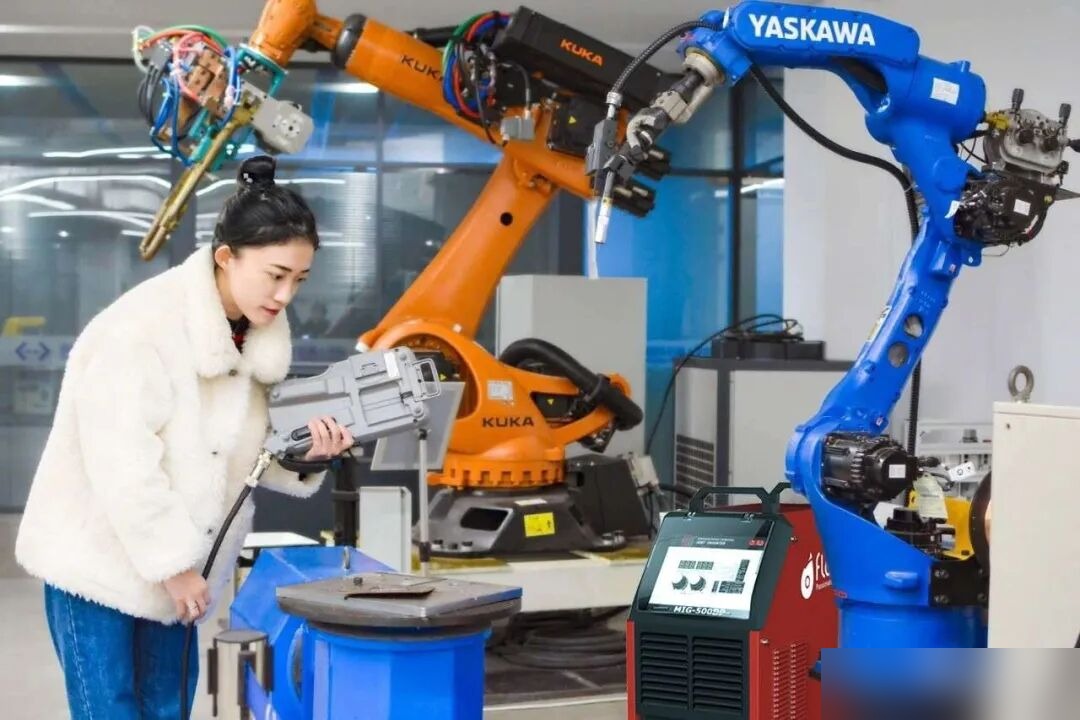
▲ Teaching and commissioning is the most labor-intensive stage of robotic welding deployment
Difficulty 3: Weld Seam Recognition — Easy in Theory, Hard in Practice
The ideal is attractive; the shop floor is not.
Many solutions advertise “AI seam recognition” and “automatic vision tracking,” which sounds impressive.
How do they actually perform?
Flat and uniform welds are recognized without issue. But what is most common on site? Grooves that are uneven, inconsistent gaps, misalignment, mill scale, and spatter occlusion — under these conditions, vision systems are at a loss.
A weld that a human eye can instantly tell how to weld may fail to be correctly identified by the machine.
Worse still, during welding itself: arc glare, fume, and molten pool flow make it impossible for the camera to see clearly. The so-called “real-time seam tracking” is little more than a decoration in many scenarios.
💡 Key takeaway
Do not trust the demo videos in presentations — look at real cases in the same industry under the same working conditions.
What your welds actually look like, how tight your accuracy requirements are, and what your site environment is like — test with real workpieces before making a decision.
A demo is one thing; deployment is another.
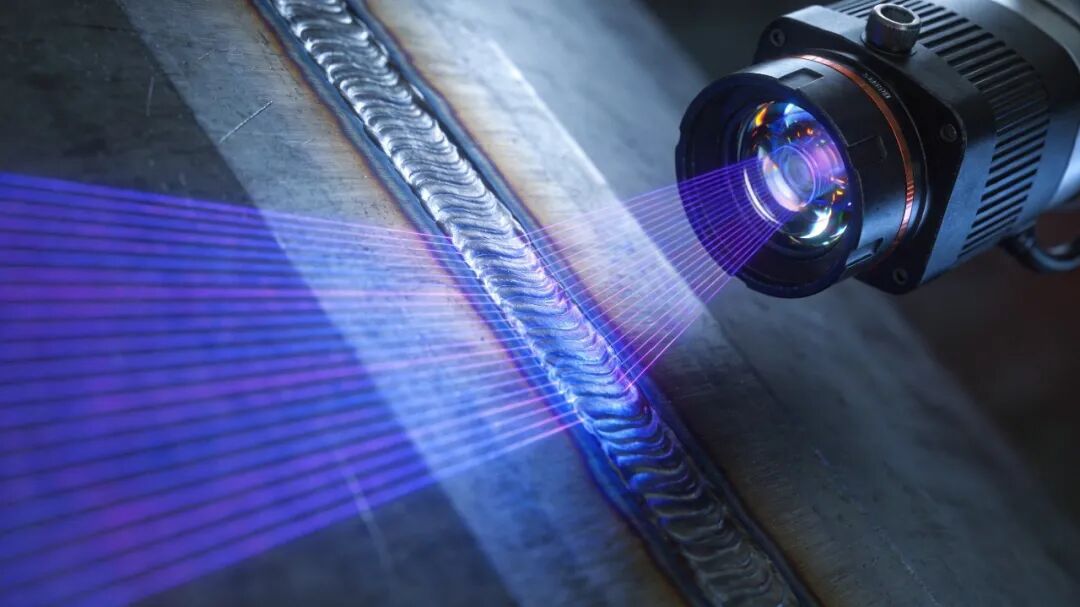
▲ 3D vision seam recognition: a gap remains between ideal and reality
Difficulty 4: Small Batches and Customization — the Natural Enemy of Robots
The defining feature of the welding industry is non-standard work.
Every ship from a shipyard is different, every steel structure project is different, and chemical equipment is unique from unit to unit. The value of a skilled welder lies in being able to produce qualified welds on all kinds of unusual workpieces.
What about robots? They excel at repetition. On the same workpiece, welded a thousand or ten thousand times, their efficiency and consistency far exceed manual labor.
But change the workpiece, and they have to learn all over again.
That is why welding automation rates can exceed 90% in the automotive industry, while in shipbuilding, steel structures, and nuclear power installation, automation rates may not even reach 10% — not because companies do not want to, but because it genuinely does not pay off.
💡 Key takeaway
Low automation rates are not because these industries are backward, but because of their inherent characteristics.
Blindly pursuing “full automation” in non-standard industries is likely to lose money.
Find the “repetitive” part and let robots do it; leave the “non-standard” part to people.
Semi-automation is often more practical than full automation.
Difficulty 5: People Who Can Operate Robots Are Scarcer Than Welders
Many bosses assume that buying robots means hiring fewer welders.
What they discover: the number of welders does not drop, and they have to hire an additional robot commissioning engineer.
People who know welding cannot program; people who can program do not understand welding processes. Those who master both are rare — and their salary costs more than two welders.
What happens when the robot breaks down? When the program gets messed up? When weld quality deteriorates? None of these are things an ordinary welder can handle.
In the end: the robot is purchased, but without that commissioning engineer, it is a pile of scrap metal.
💡 Key takeaway
Before adopting robots, ask yourself: do you have people who can actually operate them?
Equipment is not the problem — money can solve that; talent is the problem — money does not always solve that.
Rather than agonizing over which robot to buy, first cultivate one or two people who understand both welding and automation.
▲ Human-robot collaboration is the most practical path for now
The Real Trend: Not “Robots Replacing People” but “Welder + Robot”
After all these difficulties, this is not to say that welding robots are useless. Quite the opposite — in the fields where they excel, both efficiency and quality far exceed manual labor.
But we need to be clear about a basic fact:
Robots are tools, not saviors.
What they replace are the repetitive, simple, and harsh welding stations — such as batch welding of automotive chassis and continuous welding of home appliance sheet metal. In these scenarios, robots are fast and good, and they have long since replaced human labor.
But in complex, variable, small-batch scenarios, the economics of robots still fall far short. The experience and judgment of skilled welders remain irreplaceable.
The real trend is not “robots replacing welders” but the combination of “welder + robot.”
Robots handle the heavy, tiring, repetitive work; welders handle the skilled work, commissioning, and quality control. One experienced welder working with two or three robots multiplies productivity severalfold, with more stable quality.
That is the true direction of the industry.
In Closing
The welding profession will not disappear — it will evolve.
In the past, welders competed on steady hands, output volume, and endurance.
In the future, welders will compete on who can operate robots, who understands process commissioning, and who can manage an entire automated welding line.
Pure manual welders will become fewer, while “advanced welders” who understand technology and can operate equipment will become more valuable.
The same logic applies to equipment manufacturers.
It is not about making robots as “fully automatic” as possible, but about truly solving problems for welders — making the complex simple, the repetitive efficient, and the dangerous safe.
Having been in the welding equipment business for many years, our deepest insight is this:
Good equipment never aims to replace people — it aims to empower them.
Freeing welders from the back-breaking physical labor so they can do work with higher technical content; helping companies hold steady on output and quality under the big trend of the “welder shortage.”
That is the true value of welding robots.