
Collaborative Robots vs Traditional Industrial Welding Robots
Collaborative robots: friendly partners for human-robot collaboration. As the name suggests, the core feature of collaborative robots is the ability to interact and work directly and safely with humans in a shared space. They extend the “human” dimension of robot capabilities, giving robots a degree of autonomous behavior and collaborative ability. In unstructured environments, they can work alongside people to complete complex actions and tasks, truly becoming partners of human workers.
Traditional industrial robots: the “steel warriors” of industrial production. The International Organization for Standardization defines an industrial robot as an automated, reprogrammable, multipurpose manipulating machine with controllable speed and position, which independently controls and processes various parts and tools to execute and complete various operations, and may be fixed or mobile.
Hardware Analysis: Different Sizes and Structures
(I) Body Size: Compact and Agile vs Large and Powerful
Visually, collaborative robots and traditional industrial robots differ markedly. A collaborative robot is like a light, agile dancer — compact in size, typically weighing from a few kilograms to several tens of kilograms, and very easy to move and deploy. Companies can easily relocate it to different work areas as production needs change, much like moving an ordinary piece of office equipment. Moreover, its compact size allows it to move freely through narrow work spaces and complete various tasks with ease — whether on the compact production lines of small factories or on the precision workbenches of laboratories, it always finds a place to shine.
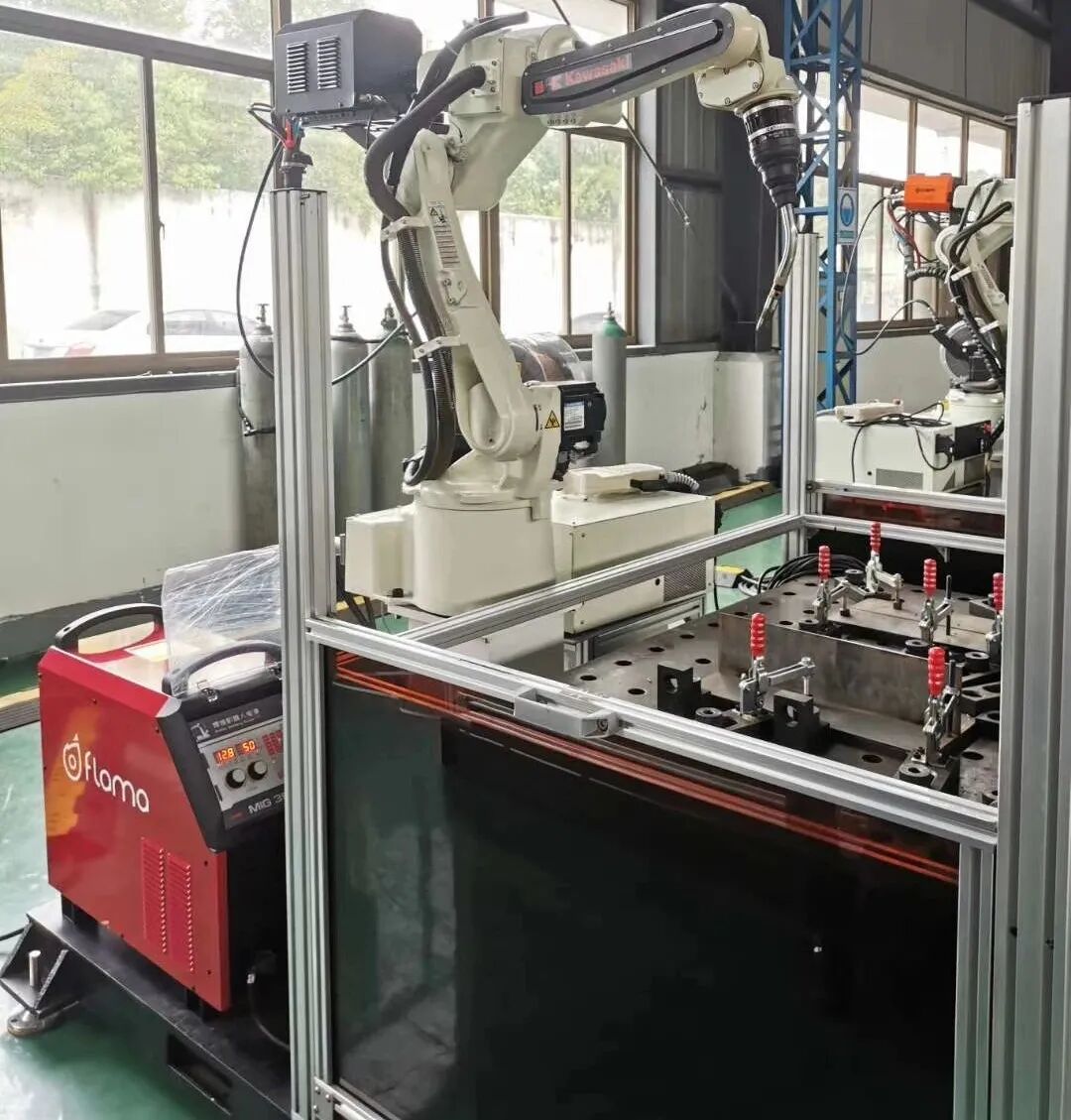
Traditional industrial robots, by contrast, are like strong heavyweights — bulky, often weighing from several hundred kilograms to several tons. For example, the traditional industrial robots used in automobile plants to handle large body components are huge in size, occupy substantial space, and require professional teams and heavy equipment for installation and commissioning. Their bases are typically extremely sturdy to support the massive body and powerful drive system, and the strength and stability they display during operation are impressive. However, precisely because of this, they are relatively weak in flexibility and spatial adaptability: once installed in a fixed position, significant adjustment is very difficult.
(II) Mechanical Structure: Versatile and Flexible vs Standard and Fixed
Collaborative robots have more versatile and flexible mechanical structures. Some adopt multi-joint structures that imitate human arm movements to achieve various complex motion trajectories; others use innovative soft-body structures with greater compliance and adaptability, enabling them to perform tasks in irregular environments — like a flexible octopus tentacle that can bend and stretch freely.
Traditional industrial robots, on the other hand, have relatively standard and fixed mechanical structures, mostly articulated designs with 4 or 6 axes. Taking the common six-axis serial robot as an example, its six joints control movement in different directions, including rotation, swivel, and swing. Through the coordinated motion of these joints, the end effector achieves precise positioning and operation in three-dimensional space.
Performance Comparison: Each with Its Own Strengths
(I) Payload Capacity: Lightweight Contender vs Heavyweight
In terms of payload capacity, collaborative robots and traditional industrial robots are like competitors in two different weight classes. Collaborative robots are usually the lightweight contenders, with a maximum payload of around 20 kg, mainly used for light-load tasks. Traditional industrial robots, however, are true heavyweights, generally capable of payloads up to 2000 kg, easily taking on tasks such as moving and processing heavy materials.
(II) Accuracy and Speed: Precision Operation vs High-Efficiency Operation
Collaborative robots perform excellently in accuracy, achieving a high level of repeat positioning accuracy that can satisfy tasks with extremely demanding precision requirements. However, because collaborative robots must take into account the safety of working alongside humans, their operating speed is relatively slow — the maximum linear speed is generally less than half that of traditional industrial robots — and their acceleration is also far lower. Traditional industrial robots excel in speed and efficiency: they operate very quickly and can complete a large number of repetitive tasks in a short time, greatly improving production efficiency. They also deliver outstanding performance in repeat positioning accuracy.
(III) Workspace: Limited Space vs Wide Coverage
Owing to their structural and design characteristics, collaborative robots have a relatively limited workspace. Generally speaking, their reach is short — usually comparable to the length of a human arm — so they can only complete tasks within a relatively small space. Traditional industrial robots, in contrast, have a larger workspace and can cover a much wider area. Their mechanical design allows the arm to extend over long distances, enabling them to move freely across the production lines of large factories and complete various complex tasks.
Cost Comparison: Differences in Investment and Returns
(I) Programming and Operation: Easy to Learn vs Professional Requirements
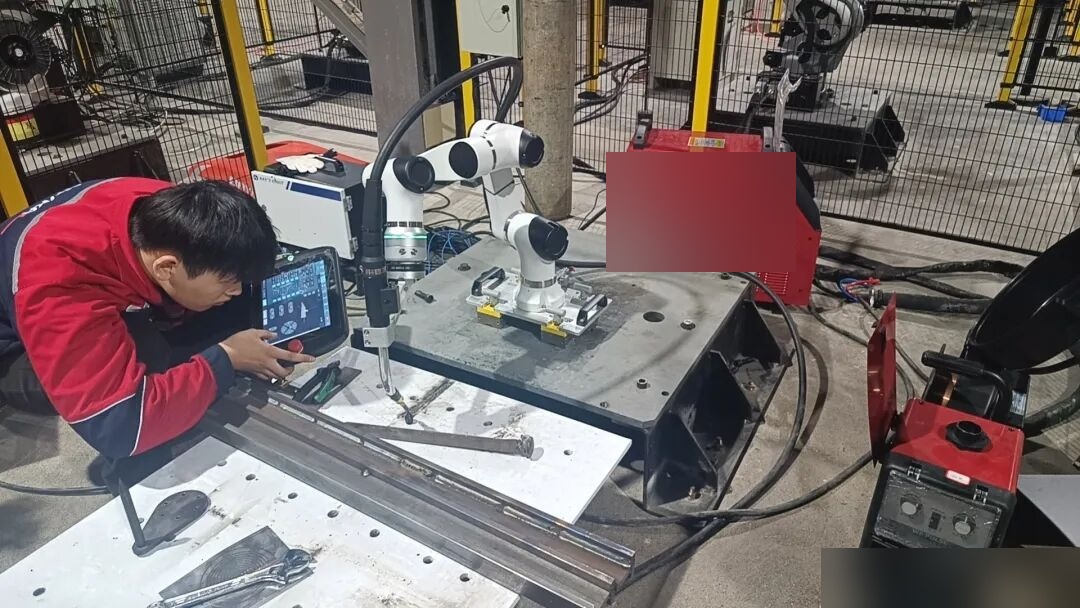
Collaborative robots have clear advantages in programming and operation. Their programming methods are simpler, more intuitive, and easy to learn. This greatly lowers the technical requirements for operators: even ordinary workers without programming experience can quickly master a collaborative robot after a short period of training, without relying on specialized technical staff.
In contrast, programming and operating traditional industrial robots require a higher level of professional knowledge and skills. They typically use complex programming languages, such as the RAPID language used by one international industrial robot brand and the Karel language used by another. These languages have strict syntax and logical structures, and operators need a solid programming foundation and extensive experience to master and apply them. Companies often have to hire professional engineers for programming and commissioning, and provide long-term training for operators, before the robots can operate normally and efficiently.
(II) Deployment Cost: Low Cost, Fast Deployment vs High Cost, Long Cycle
Collaborative robots have relatively low deployment costs and short deployment cycles. Thanks to their compact size and simple structure, installation and commissioning are relatively easy — the whole process from installation to production use generally takes only a few hours to a few days. In addition, collaborative robots have relatively low requirements for the working environment and do not require large-scale infrastructure modification. Companies can flexibly deploy collaborative robots to different work areas according to their production needs, further reducing deployment costs.
Traditional industrial robots, however, have higher deployment costs and longer cycles. Due to their large size and complex structure, installation and commissioning require professional teams and heavy equipment, usually taking weeks or even months. During deployment, the production line often has to be modified on a large scale to accommodate the robot’s working requirements, further increasing deployment costs and time.
Welding Comparison: Choosing the Application That Fits
| Dimension | Industrial Robot | Collaborative Robot |
|---|---|---|
| Safety | Requires isolation fencing; operates independently | Human-robot collaborative operation with built-in anti-collision system |
| Deployment cost | Equipment + integration fees ≥ ¥200,000; cycle of 1–3 months | From ¥100,000; rapid deployment within 1 day |
| Flexibility | Fixed production line; reprogramming requires professional engineers | Drag-and-drop programming; novices proficient within 1 hour |
| Payload/accuracy | High payload (≥50 kg); ±0.05 mm high accuracy | Light payload (3–20 kg); ±0.1 mm accuracy |
| Typical scenarios | Car chassis, long welds on thick ship plates | Small-batch, multi-variety and confined-space welding |
Conclusion:
- Traditional robots: Clear efficiency advantages in heavy welding and standardized mass production.
- Collaborative robots: Outstanding flexibility for flexible production and small-to-medium orders.