
Collaborative Robot TIG Welding Application Scenarios
Against the backdrop of Industry 4.0 and intelligent manufacturing, the welding industry is undergoing a transformation toward flexibility. Although traditional industrial robots are efficient, their heavy, enclosed designs make it difficult to meet the demands of small-batch, high-precision, and human-robot collaborative production. Collaborative TIG welding robots (cobots), with their portability, safety, and intelligence, have become one of the most closely watched technologies in the welding industry over the past year. Despite remaining technical challenges such as accuracy and interference resistance, their successful applications in aerospace, precision manufacturing, and other fields have opened up new possibilities for the industry.
Why TIG Welding Needs Collaborative Robots
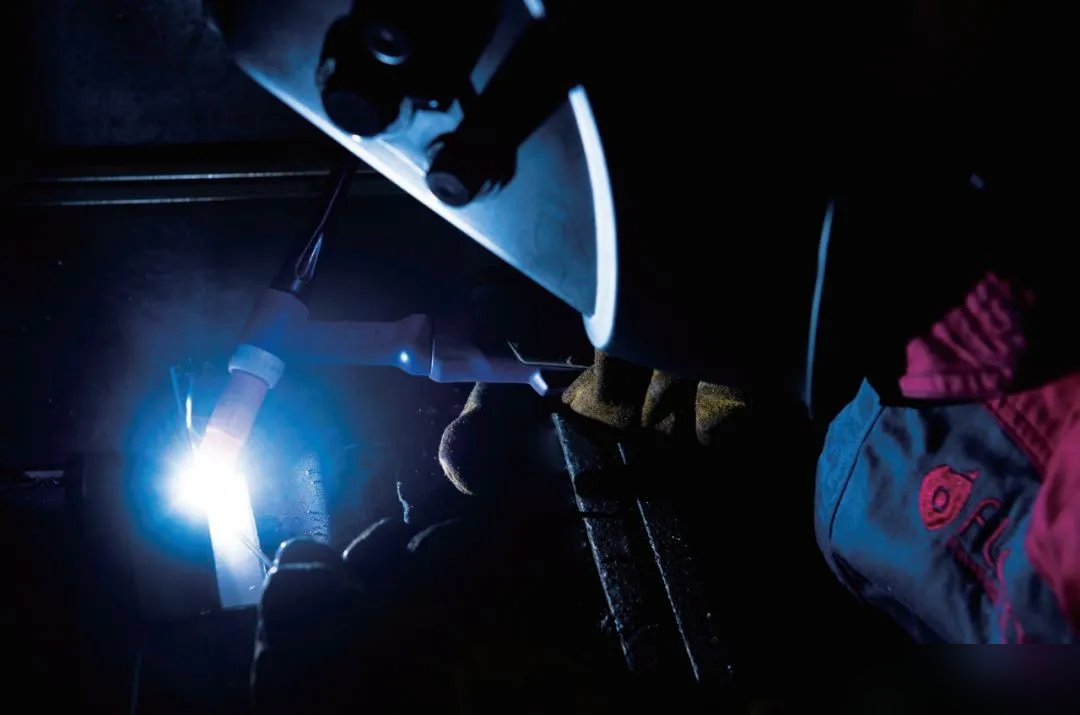
TIG welding is widely used for high-end materials such as stainless steel and aluminum alloys, thanks to its high precision, low heat input, and clean weld seams. However, traditional TIG welding relies heavily on welder experience and faces three major pain points:
- High labor costs: Skilled welders take a long time to train, and operator fatigue can lead to quality fluctuations.
- Environmental constraints: High-frequency arc starting interferes with nearby equipment, and welding fumes pose health risks.
- Insufficient flexibility: Traditional robots struggle to adapt to the flexible production requirements of multi-variety, small-batch manufacturing.
Collaborative robots fill this gap precisely:
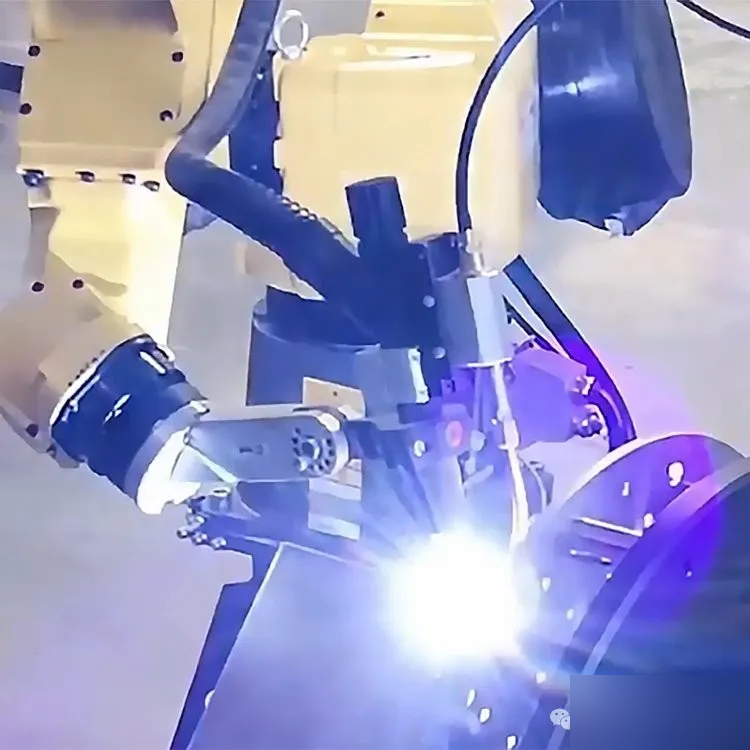
- Human-robot integration: No safety fencing is required; workers can adjust the robot trajectory in real time, combining human experience with machine stability.
- Plug-and-play: Lightweight design (typically under 30 kg) and rapid deployment suit the flexible production needs of small and medium-sized enterprises.
- High-accuracy compensation: Force control sensors and vision guidance enable weld seam tracking accuracy at the ±0.1 mm level.
Technical Breakthroughs: From Laboratory to Factory
Although cobot TIG welding technology is still at an early stage, significant progress has been made over the past year:
1. Improved Accuracy and Stability
- Multi-sensor fusion: A dual-mode feedback system combining laser vision and arc sensing compensates in real time for weld seam deviation caused by thermal deformation.
- High-frequency interference resistance: Electromagnetic shielding layers and optimized filters reduce the interference of TIG high-frequency arc starting on the robot control system (measured interference suppression rate greater than 90%).
- Dedicated arc welding software packages: For example, the “Smart TIG” module launched by a leading manufacturer supports self-optimization of pulsed welding parameters for different materials and thicknesses.
2. Typical Application Scenarios
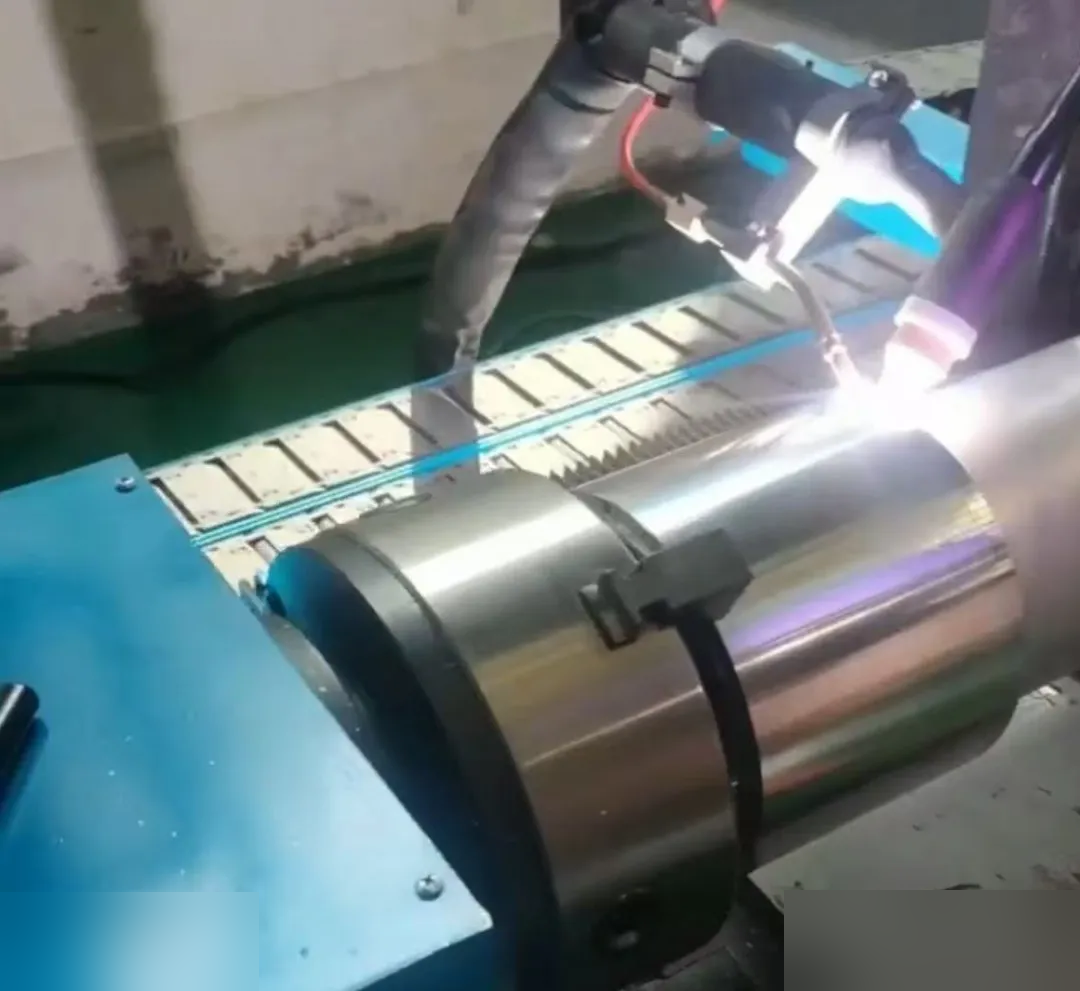
- Aerospace thin-wall component welding: An aerospace company uses cobots to complete welding of 0.8 mm aluminum alloy fuel tanks, with the yield rate rising from 75% to 98%.
- Precision medical device welding: Micro-beam TIG welding of stainless steel implant stents (current ≤ 10 A) achieves a robot repeat positioning accuracy of ±0.05 mm.
- On-site repair and confined-space operations: Portable cobots can flexibly enter restricted scenarios such as pipelines and ship compartments.
Challenges and Outlook: Bottlenecks Awaiting Breakthroughs
The widespread adoption of cobot TIG welding still faces three major technical barriers:
- Insufficient dynamic accuracy: During high-current welding, the thermal-mechanical coupling of the arc causes end-effector vibration, requiring better real-time compensation algorithms.
- Lack of process databases: Matching TIG welding parameters (such as gas flow rate and pulse frequency) to materials still relies on manual tuning, and the level of intelligence needs to be improved.
- Cost and ecosystem constraints: Dedicated arc welding packages are expensive, and their integration compatibility with existing production systems (such as MES) is insufficient.
Industry trend outlook:
- AI-driven process optimization: Deep-learning-based automatic generation of welding parameters may become the next breakthrough.
- Modular design: “Plug-and-weld” modes with replaceable torches and wire feeders will lower the barrier to adoption.
- Establishment of standards: Process specifications and safety standards for collaborative robot TIG welding are expected to be issued within the next two years.
Conclusion
Collaborative robot TIG welding is not only a technological innovation but also a shift in production philosophy. It moves welding away from the rigid model of “heavy assets and high barriers” toward flexible manufacturing that is “lightweight and human-robot collaborative.” Although challenges remain ahead, collaborative TIG welding robots, with their unique advantages in small-batch customization and precision manufacturing, are expected to become an important pillar of the upgrade of high-end manufacturing.