
Challenges and Future of Teach-Free Collaborative Welding Robots
In a welding workshop, a master welder with decades of experience can glance at a workpiece, judge its position, and set ideal parameters to produce a high-quality weld seam. This fluid process of “human eyes observe, the brain decides, and hands execute” represents the ultimate dream of the welding industry for welding robots: teach-free welding. In the field of traditional industrial robots, this dream has already begun to take shape with the help of technologies such as 3D vision and offline programming. However, when we turn our attention to collaborative robots (cobots), which have become increasingly popular in recent years, we find that “teach-free” operation faces considerable difficulties here.
Why is this the case? Today, we will take an in-depth look at the core challenges of achieving teach-free welding with collaborative robots, as well as the key technological breakthroughs needed for the future.
Why Is “Teach-Free” Welding Especially Difficult on Collaborative Robots?
Collaborative robots have become a popular choice for the intelligent transformation of small and medium-sized enterprises thanks to their safety, ease of use, and flexibility. However, their underlying design philosophy conflicts with the stringent requirements of teach-free welding in multiple dimensions:
1. Inherent Constraints of Accuracy and Rigidity
-
Core conflict: Teach-free welding relies heavily on vision systems to recognize and locate workpieces with high precision. Collaborative robots typically use lightweight serial-link designs and harmonic reducers, and sacrifice some rigidity in exchange for collision safety. Their absolute positioning accuracy (typically around ±0.1 mm) and the absolute trajectory accuracy under repeated positioning can hardly match the recognition results of high-precision 3D vision systems (which can reach ±0.05 mm).
-
Consequence: No matter how accurately the vision system “sees,” the robot “arm” cannot stably and precisely reach the theoretical position, leading to fluctuations in welding quality.
2. The Dilemma Between Force-Control Sensitivity and Process Stability
-
When a collaborative advantage becomes a shortcoming: One of the core advantages of collaborative robots is sensitive force feedback and collision protection. However, arc welding is a process with strong interference and multiple variables (arc, fumes, spatter, and thermal deformation).
-
The problem: The compliant control algorithms designed to maintain sensitive force control may produce unnecessary jitter or responses under the strong interference of the welding arc, which in turn undermines the stability of the welding process.
3. The Capability Boundary of Payload and Performance
-
Payload limits: The payload of mainstream collaborative robots ranges from 3 to 16 kg. A mature teach-free welding system typically includes a 3D vision sensor, a laser seam tracker, a dedicated welding torch, and a wire feeder, whose combined weight can easily approach or even exceed the payload limit of a collaborative robot.
-
Performance trade-offs: Even if the system can be mounted with difficulty, the robot’s motion performance (such as maximum speed and inertia) is significantly degraded, affecting cycle time.
4. The Fundamental Conflict Between Safety Logic and Process Requirements
-
Safety-first design: The core safety logic of collaborative robots is “stop on obstruction” or “compliant avoidance.”
-
Process requirements: Welding processes require continuity, stability, and uninterrupted operation. A brief pause can lead to serious defects such as crater cracks and incomplete fusion. Ensuring that the robot protects human safety without being triggered into an unnecessary stop by normal interference from the process environment is a major control challenge.
The Way Forward: Key Technologies for Teach-Free Welding with Collaborative Robots
To enable collaborative robots to truly handle teach-free welding, a comprehensive technological upgrade from “perception” to “decision-making” and then to “execution” is required. Currently, the industry is tackling this challenge in the following directions:
1. Multi-Sensor Fusion Perception: Giving Robots “Sharp Eyes” and “Tactile Nerves”
-
Technical core: Instead of relying solely on 3D vision, integrate it deeply with laser seam tracking, passive vision (direct observation of the weld pool), and force sensing.
-
Functions: 3D vision handles initial positioning and macroscopic path planning; laser tracking fine-tunes the path in real time during welding; force sensing perceives contact states and compensates for workpiece assembly errors and thermal deformation; passive vision monitors the weld pool state to close the loop on process quality.
-
Market practice: An international industrial robot brand has launched an “integrated vision welding system,” and some domestic robot companies in China are also promoting deep integration solutions for vision and robots. However, lightweight, cost-effective multi-sensor fusion solutions for collaborative robot platforms remain an open field.
2. AI Process Models and Adaptive Control: Instilling Collaborative Robots with a “Master Welder’s Brain”
-
Technical core: Use machine learning and deep learning to build a knowledge graph of welding processes. Based on information such as seam type, groove dimensions, and assembly gaps perceived by vision, the system can automatically generate and optimize welding parameters (current, voltage, speed, weaving, etc.) in real time.
-
Functions: This truly achieves “weld correctly the moment you see it,” addressing the adaptability of collaborative robots in complex, variable working conditions.
-
Industry trend: This is at the forefront of current R&D. Some startups and university laboratories are experimenting with it, but mature AI welding process models suitable for large-scale industrial application are still taking shape.
3. Dedicated Software-Hardware Co-Optimization: Building “Welding-Enhanced” Collaborative Robots
-
Hardware level: Develop dedicated modules for collaborative welding robots, such as lightweight integrated welding torches, ultra-compact 3D vision sensors, and embedded control cabinets. An international collaborative robot manufacturer has already cooperated with multiple welding equipment suppliers to build an ecosystem.
-
Software level: Develop low-level motion control algorithms that, within the collaborative safety framework, open up a “process priority mode” for welding, allowing the robot to moderately reduce collision detection sensitivity during welding or adopt smarter obstacle avoidance strategies to ensure process continuity.
4. Cloud-Based Process Libraries and Ecosystem Building: From “Single-Machine Intelligence” to “Collective Intelligence”
-
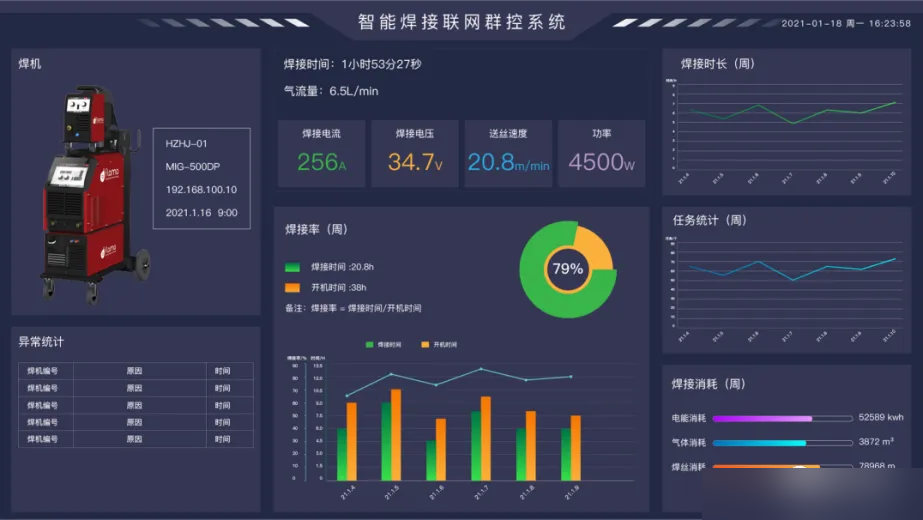
Future vision: Through a cloud platform, aggregate data and process packages from different factories and different robots welding similar workpieces. When a new task is assigned, the robot can directly call and match the optimal process from the cloud, achieving “out-of-the-box usability that gets smarter with use.”
-
Pioneers: Some companies have developed cloud systems that already provide prototypes of such services. In the collaborative robot field, one company, leveraging its built-in vision, has taken the lead in ease of use, providing a solid foundation for teach-free path planning.
Human-Robot Collaboration and Bionic Robots: Flexible Welding Solutions
The future collaborative welding robot will no longer be a complex device requiring repeated programming by engineers, but an intelligent terminal integrating “perception, decision-making, and execution.” It will be able to:
-
Autonomous recognition: Automatically identify the position, type, and size of weld seams when approaching a workpiece.
-
Autonomous planning: Autonomously plan the optimal collision-free welding path within safe space.
-
Autonomous welding: Call up or generate the best process parameters, complete the welding stably, and make real-time adjustments.
-
Autonomous evaluation: Make a preliminary assessment of weld quality based on sensor data.
Conclusion
The challenge of achieving teach-free welding with collaborative robots essentially requires them to acquire “professional, precise, and robust” industrial capabilities while retaining their core of “safety and ease of use.” This is a path full of technical obstacles but with a bright future. For welding equipment manufacturers and solution providers, this is not only a technological race but also a deep response to user needs: enabling welders without programming backgrounds to easily control intelligent robots and transform their experience into replicable digital processes.