
The end face is a weld preparation, and it is usually neglected
When two beams butt together, the joint is made between their end faces. If those faces are not square to the beam axis and flat across their width, the root gap varies across the section: closed on one flange, open on the other. The welder then either fills a gap that should not exist or fails to penetrate where the faces touch.
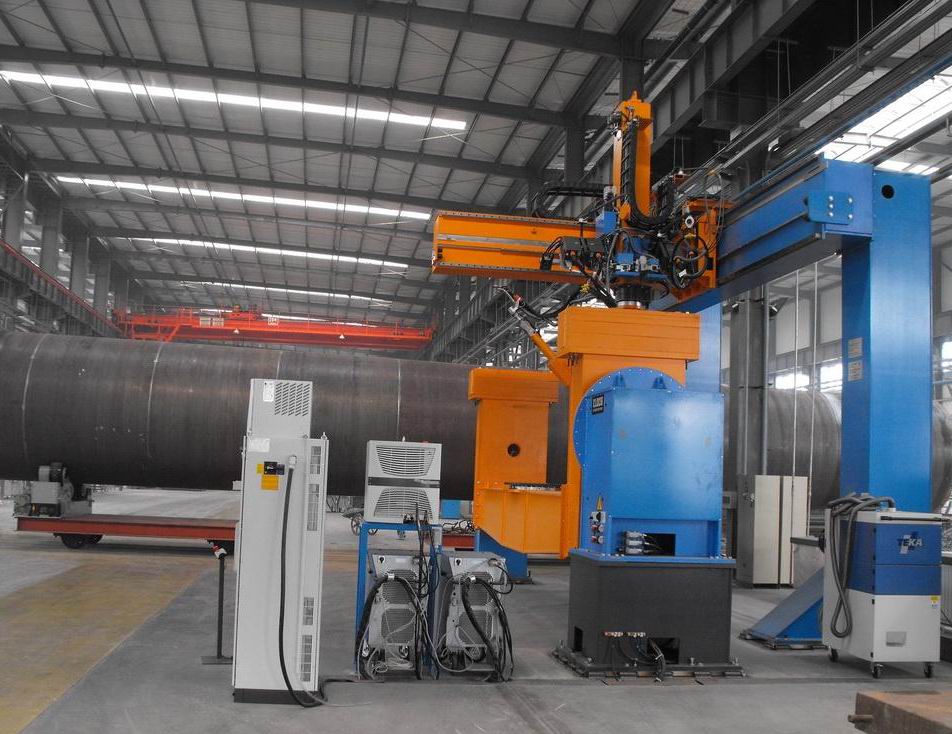
A beam face milling machine machines the end of an H-beam, box beam or fabricated column square and flat, in one pass, so the butt joint starts from a controlled geometry. It is the beam equivalent of a plate edge milling machine, and it exists because saw cutting and thermal cutting both leave something behind: a saw leaves a cut that is square but not always flat across a wide flange, and thermal cutting leaves an edge that is not square at all and carries an oxide layer.
Why squareness at the end matters more than it looks
On a column that is 12 m long, an end face 1 mm out of square means the column is 1 mm shorter on one flange. Multiply by the splice and the accumulated error shows up as a structure that does not close. On a butt weld, the same 1 mm produces an asymmetric root gap that has to be corrected by weld volume — which means more heat, more shrinkage, and a joint that pulls the beam out of line.
| Requirement | Why | What produces it |
|---|---|---|
| Squareness to beam axis | Controls root gap uniformity across the section | Machining with the beam referenced off its axis, not off a cut face |
| Flatness across flange width | Prevents point contact and a closed root on one side | Face milling with a head that spans the section |
| Surface finish free of oxide | Oxide from thermal cutting causes porosity and lack of fusion at the root | Machining rather than cutting |
| Perpendicularity of web to flange | A skewed section will not fit the adjacent member | Clamping the beam square during machining |
How the machine is built
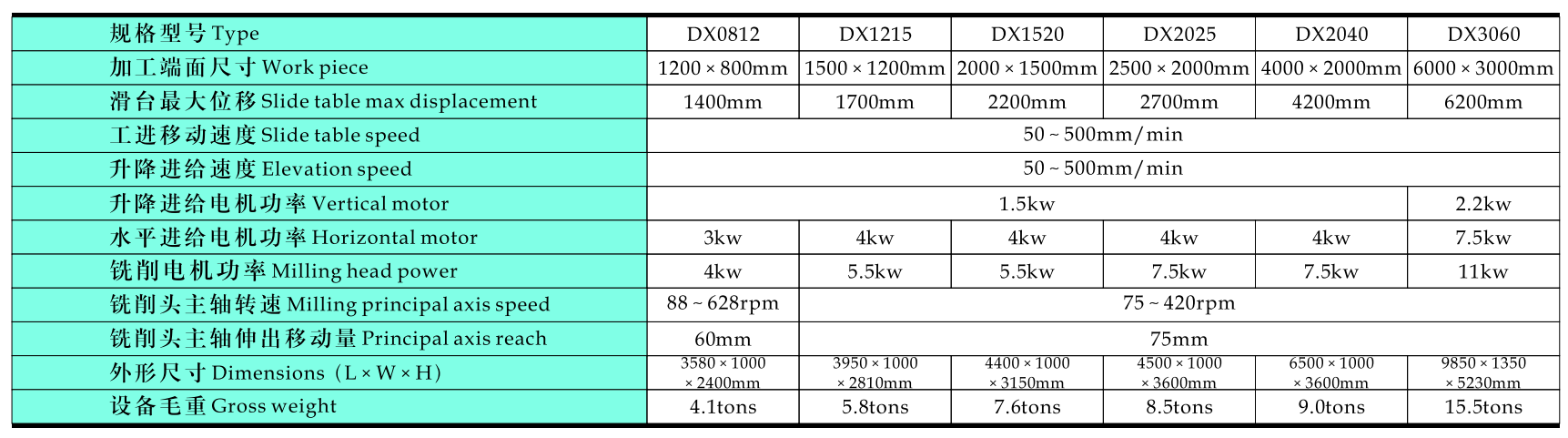
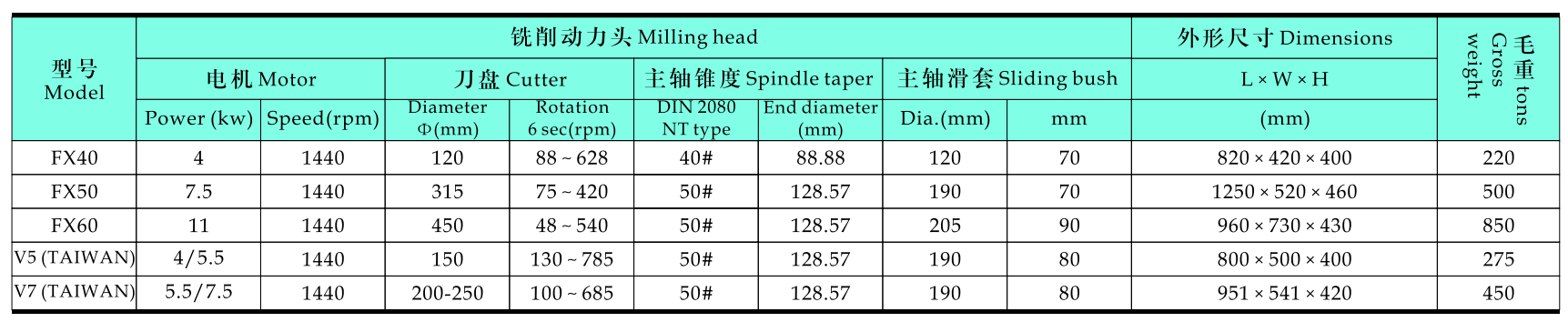
The working principle is a milling head on a slide, with the beam clamped and referenced against its own web and flange rather than against the rough cut end. The head traverses across the end face while the cutter removes a controlled depth — typically a millimetre or two, enough to clean up the cut and establish the face.
Two details decide whether the machine achieves its tolerance:
- Clamping that does not distort the beam. Over-clamping a thin-walled box section closes it slightly, and the machined face springs back out of flat when released. Clamping force and support positions are part of the setup, not an afterthought.
- Head rigidity and cutter condition. A face mill that chatters leaves a face that is dimensionally correct but not flat, and flatness is what the weld needs.
Where beam face milling is required
- Petrochemical and process structures — fabricated columns and beams that butt together with full-penetration welds.
- Construction and bridge — spliced columns and girders where accumulated length tolerance matters.
- Machine frames — where the beam end carries a mounting face and flatness is functional, not just cosmetic.
- Box-column fabrication — ends that must present a flat face to a base plate or a splice plate.
Face milling versus saw cutting
A cold saw produces a square cut and is fast, and for many structural joints it is sufficient. Where it falls short is on large sections and on fabricated (welded) beams: a saw blade large enough to cut a 1,000 mm deep beam is a substantial machine, welded sections can move as the cut releases residual stress, and the cut face is not necessarily flat across a wide flange with a mill scale surface. Milling removes a light cut from a face that has already been cut roughly — combining the speed of cutting with the tolerance of machining.
Specifying a beam face milling machine
We need: beam type and section range (depth, flange width, web thickness), maximum beam length and weight, the material, the tolerance required on squareness and flatness, whether the beam is a rolled section or a fabricated weldment (which affects clamping and residual stress), the required cycle time per end, and the shop layout including crane access.
Minimum order quantity is 1 set. Standard machines ship in 30–50 days after deposit; special clamping arrangements for unusual sections are scheduled in the technical proposal. Payment terms are T/T; trade terms are FOB, FCA or CIF. Core ranges are CE compliant and supplied against a certificate of compliance.
Beam and plate processing equipment is supplied under the DESAN brand by DESAN ELECTRIC LTD, which has served 1,000+ customers in 20+ countries over 20+ years with welding engineering experience since 1997. For plate edge preparation, see the plate edge milling machine; for complete beam lines, see the H-beam production line.